
 英语
英语 西班牙语
西班牙语 德语
德语Theta Vacuum Cold Mounting Machine
Product Description
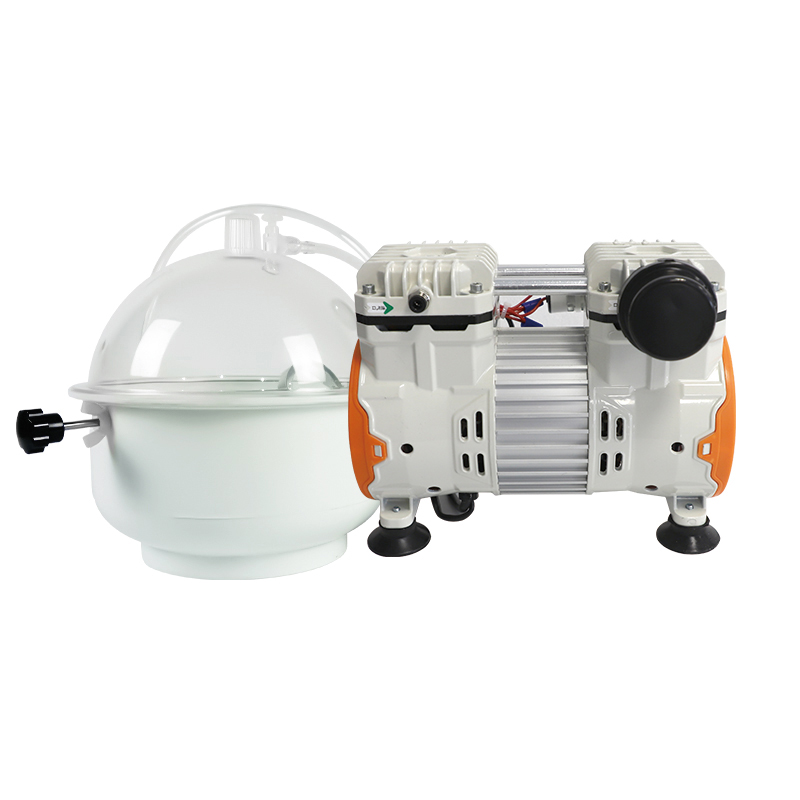
Theta Vacuum is a cold mounting machine that has integrated a vacuum pump and a ...
We use first- and third-party cookies including other tracking technologies from third party publishers to give you the full functionality of our website, to customize your user experience, perform analytics and deliver personalized advertising on our websites, apps and newsletters across internet and via social media platforms. For that purpose, we collect information about user, browsing patterns and device.
By clicking "Accept All Cookies", you accept this, and agree that we share this information with third parties, such as our advertising partners. If you prefer, you can choose to continue with "Only Required Cookies". But keep in mind that blocking some types of cookies may impact how we can deliver tailored content that you might like.
For more information and to customize your options, click on "Cookie settings". If you want to learn more about cookies and why we use them, visit our Cookie Policy page at any time. Cookie Policy

Transparent hot mounting resins have become essential materials in metallography, material science, and electronic component analysis due to their ability to encapsulate samples for precise observation and testing. Among these, TM-2261 Transparent Hot Mounting Resin has gained attention for its specific combination of clarity, mechanical stability, and thermal performance.
Transparent hot mounting resins are engineered to provide mechanical support, chemical stability, and optical clarity during sample preparation. Key properties include:
TM-2261 Transparent Hot Mounting Resin exhibits a combination of these properties that makes it suitable for a broad range of materials, from metals and composites to electronic assemblies.
When evaluating transparent mounting compounds, several performance criteria are essential for system-level decision-making:
| Parameter | Description | TM-2261 Performance | General Industry Range |
|---|---|---|---|
| Clarity | Ability to maintain optical transparency post-curing | High, minimal yellowing | Moderate to high, some resins show slight haze |
| Hardness (Shore D) | Resistance to mechanical deformation | 75–80 | 65–85 |
| Thermal Resistance | Temperature range during curing without structural compromise | 150–170°C | 130–180°C |
| Shrinkage | Dimensional change after curing | <0.5% | 0.5–1.2% |
| Bubble Formation | Tendency to form voids during curing | Low | Low to moderate |
| Cure Time | Standard heating duration for full polymerization | 8–12 minutes | 6–15 minutes |
This table illustrates that TM-2261 maintains a balanced profile, offering high optical clarity with low shrinkage, making it suitable for critical inspection workflows.
Transparent mounting compounds are not evaluated solely on individual parameters; their impact on the overall preparation system is critical. This includes:
The suitability of TM-2261 can be evaluated across common sample types:
| Sample Type | Key Requirement | TM-2261 Suitability | Notes |
|---|---|---|---|
| Metals (steel, aluminum) | High hardness, minimal shrinkage | Very Good | Preserves microstructural detail during polishing |
| Composites | Low thermal stress, bubble-free | Good | Handles mixed materials with differing thermal expansion coefficients |
| Electronics | Optical clarity for inspection, chemical resistance | Excellent | Supports microscopic analysis of PCBs and electronic components |
| Ceramics | Hardness and dimensional stability | Good | Cures uniformly without cracking |
This system-level evaluation demonstrates that TM-2261 is versatile, offering consistent performance across a range of materials while supporting accurate analysis.
To maximize the benefits of transparent hot mounting compounds like TM-2261, operational protocols are critical:
Implementing these practices enhances the effectiveness of TM-2261 in laboratory and production environments.
These considerations ensure safe and sustainable use within operational systems.
TM-2261 Transparent Hot Mounting Resin supports integration with diverse analytical techniques:
Selecting a transparent mounting resin that aligns with system-level analytical requirements reduces variability and improves reproducibility.
TM-2261 Transparent Hot Mounting Resin provides a balanced combination of optical clarity, mechanical hardness, thermal resistance, and dimensional stability. Compared with other transparent mounting compounds, it offers:
By considering both material properties and system-level requirements, laboratories and production facilities can leverage TM-2261 to achieve reliable and reproducible results.
Q1: Can TM-2261 be used for multi-material samples?
A1: Yes, its thermal stability and low shrinkage make it suitable for samples with mixed materials, reducing stress during curing.
Q2: How does TM-2261 affect polishing outcomes?
A2: Its balanced hardness ensures uniform wear, preserving sample edges and surface features for accurate analysis.
Q3: Is vacuum degassing necessary?
A3: Vacuum degassing can reduce microbubbles, particularly for delicate samples, but TM-2261 generally has low bubble formation.
Q4: What temperature range is recommended for curing?
A4: TM-2261 performs optimally at 150–170°C, balancing cure time with mechanical and optical properties.
Q5: Can TM-2261 mounts withstand repeated chemical exposure?
A5: Yes, the cured resin exhibits strong chemical resistance, suitable for repeated polishing or solvent cleaning.

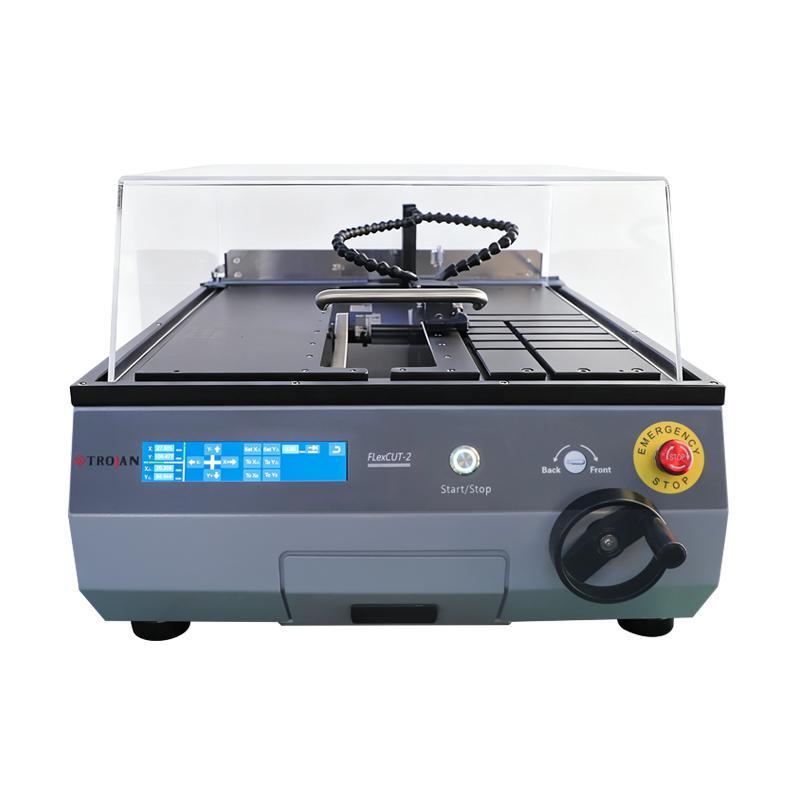

Based in China, TROJAN pays attention to the international market, and has sold metallographic equipment to more than 50 countries, such as Europe, America, Japan and South Korea, Southeast Asia countries and regions


