 英语
英语 西班牙语
西班牙语 德语
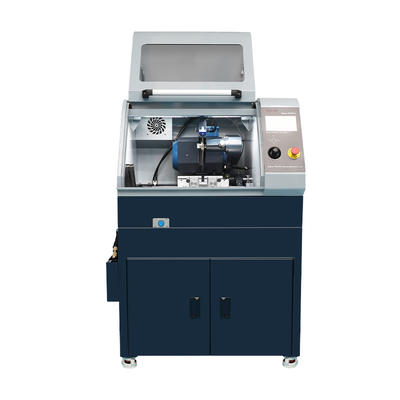
德语Beta-300Pro Automatic Abrasive Sectioning Machine
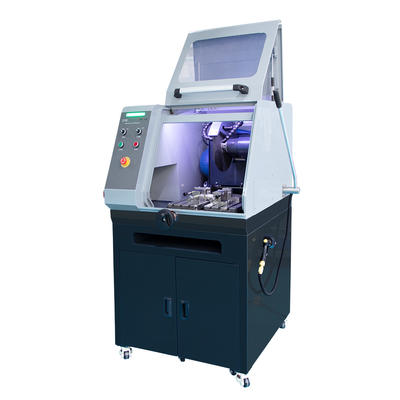
Beta-300Pro is a fully automatic vertical metallographic cutting machine. It utilizes advanced intel...
We use first- and third-party cookies including other tracking technologies from third party publishers to give you the full functionality of our website, to customize your user experience, perform analytics and deliver personalized advertising on our websites, apps and newsletters across internet and via social media platforms. For that purpose, we collect information about user, browsing patterns and device.
By clicking "Accept All Cookies", you accept this, and agree that we share this information with third parties, such as our advertising partners. If you prefer, you can choose to continue with "Only Required Cookies". But keep in mind that blocking some types of cookies may impact how we can deliver tailored content that you might like.
For more information and to customize your options, click on "Cookie settings". If you want to learn more about cookies and why we use them, visit our Cookie Policy page at any time. Cookie Policy

In modern material analysis and laboratory workflows, sample preparation efficiency and consistency are paramount. Among the many techniques employed, hot mounting has remained a critical process for embedding specimens in resin for subsequent polishing and examination. While manual hot mounting has been a traditional approach, the advent of automated solutions such as the FlexPRESS-M/S Automatic Modular Hot Mounting System has introduced new standards in laboratory automation.
Hot mounting involves embedding a specimen into a thermosetting resin under heat and pressure. Traditionally, laboratory technicians perform this process manually, using handheld presses and molds. Manual methods require careful monitoring of temperature, pressure, and mounting time to ensure consistent results. Any deviation can affect the sample quality, resulting in uneven surfaces or compromised microstructure integrity.
On the other hand, FlexPRESS-M/S Automatic Modular Hot Mounting System integrates automation into the process. It is designed to manage temperature, pressure, and timing with precision while allowing modular configuration to accommodate different sample types and sizes. This integration reduces operator dependence and minimizes variability, which is crucial in high-throughput laboratory environments.
One of the most significant differences between FlexPRESS-M/S Automatic Modular Hot Mounting System and manual systems lies in operational efficiency. Manual hot mounting requires intensive labor input, including specimen handling, mold preparation, and constant monitoring. Each cycle typically takes longer due to human intervention and adjustment.
In contrast, FlexPRESS-M/S Automatic Modular Hot Mounting System streamlines these operations. It features programmable cycles that automatically adjust heating profiles and pressure settings according to sample type. Laboratories using this system report reduced preparation time per sample and increased overall throughput, especially in workflows involving repetitive mounting tasks.
Table 1 summarizes the operational time differences between manual and automated hot mounting methods:
| Process Stage | Manual Hot Mounting (Average) | FlexPRESS-M/S Automatic Modular Hot Mounting System (Average) |
|---|---|---|
| Mold Preparation | 5-10 minutes | 2-3 minutes |
| Specimen Placement | 3-5 minutes | 1-2 minutes |
| Heating & Pressing Cycle | 8-12 minutes | 5-6 minutes |
| Cooling & Demolding | 5-8 minutes | 3-4 minutes |
| Total Cycle Time Per Sample | 21-35 minutes | 11-15 minutes |
From the table, it is evident that FlexPRESS-M/S Automatic Modular Hot Mounting System can reduce total cycle time nearly by half, which is critical in laboratories with high sample volumes.
Sample reproducibility is a major concern in analytical laboratories, where even minor inconsistencies can affect downstream analysis. Manual hot mounting is prone to variations due to differences in operator technique, pressure application, and thermal distribution. These inconsistencies may result in uneven resin surfaces, trapped air bubbles, or incomplete embedding.
FlexPRESS-M/S Automatic Modular Hot Mounting System addresses these issues through precise temperature and pressure control. Its modular design allows for uniform heat distribution and consistent pressure application across all sample types. This ensures that every specimen is embedded with minimal variability, improving the reliability of microscopic examination and analytical results.
Additionally, the system can record and store process parameters for each batch, providing a traceable quality record that is difficult to achieve with manual operations.
Manual hot mounting systems pose certain safety risks due to the need for operators to handle heated molds and resins directly. Accidental burns and exposure to fumes are common concerns in laboratories. Furthermore, repeated manual handling can lead to ergonomic strain, particularly in high-volume operations.
FlexPRESS-M/S Automatic Modular Hot Mounting System enhances safety through enclosed heating chambers and automated operation. Operators can initiate cycles and monitor progress without direct contact with hot surfaces. In addition, ventilation and fume management features reduce exposure to potentially harmful emissions, ensuring compliance with laboratory safety standards.
Manual hot mounting systems are limited in terms of flexibility. Changing sample types or mold sizes often requires manual adjustments or separate equipment. This can slow down laboratory workflows and increase the risk of error.
In contrast, FlexPRESS-M/S Automatic Modular Hot Mounting System provides modular adaptability, allowing laboratories to switch between different mold sizes and resin types seamlessly. Modular inserts and programmable cycle options make the system versatile, accommodating a broad range of materials such as metals, polymers, and composites. This adaptability makes the system particularly useful in multi-purpose laboratories handling diverse specimens.
While the initial investment for FlexPRESS-M/S Automatic Modular Hot Mounting System is higher than manual setups, the system offers long-term cost advantages. Reduced cycle times, lower labor requirements, and minimized waste contribute to decreased operational costs.
Table 2 provides a comparative analysis of cost implications:
| Cost Factor | Manual Hot Mounting | FlexPRESS-M/S Automatic Modular Hot Mounting System |
|---|---|---|
| Initial Equipment Investment | Low | Moderate to High |
| Labor Costs Per Sample | High | Low |
| Resin and Material Waste | Moderate | Low |
| Maintenance & Downtime | Moderate | Low |
| Total Cost Over 3 Years | Moderate | Lower Due To Efficiency Gains |
The table illustrates that, although upfront expenditure is higher, automated hot mounting can provide better return on investment in medium to high-volume laboratory settings.
Integrating FlexPRESS-M/S Automatic Modular Hot Mounting System into laboratory workflows can significantly enhance overall productivity. Automated mounting systems can synchronize with sample tracking software, enabling batch processing and reducing manual entry errors. This integration allows laboratories to maintain a streamlined workflow, improving throughput and analytical reliability.
Manual hot mounting, by contrast, depends heavily on individual operator skill and manual record-keeping, which increases the likelihood of errors and inconsistent results.
Laboratories are increasingly concerned with sustainability and energy efficiency. Manual hot mounting consumes less electrical power per cycle but often generates higher resin waste and longer processing times. FlexPRESS-M/S Automatic Modular Hot Mounting System, through controlled heating and efficient cycles, can reduce energy consumption per sample while minimizing waste. This not only contributes to lower operational costs but also supports laboratory sustainability initiatives.
While FlexPRESS-M/S Automatic Modular Hot Mounting System offers clear advantages, it is essential to recognize potential limitations. The system requires trained personnel to program cycles and manage maintenance. Additionally, laboratories with extremely low sample volumes may not fully benefit from automation, where manual mounting remains cost-effective.
Nonetheless, for medium to high-throughput environments, the benefits in reproducibility, safety, and efficiency outweigh these limitations.
The comparison between FlexPRESS-M/S Automatic Modular Hot Mounting System and manual hot mounting systems highlights the transformative impact of automation in laboratory sample preparation. Key advantages of the automated system include:
While manual hot mounting remains suitable for low-volume or specialized applications, FlexPRESS-M/S Automatic Modular Hot Mounting System establishes a new benchmark for efficiency, reliability, and laboratory standardization.
Q1: Can FlexPRESS-M/S Automatic Modular Hot Mounting System handle multiple sample types simultaneously?
A1: Yes, its modular design and programmable cycles allow handling of metals, polymers, composites, and other materials with minimal manual adjustment.
Q2: How is temperature consistency maintained in FlexPRESS-M/S Automatic Modular Hot Mounting System?
A2: The system employs precise heating elements and internal sensors to ensure uniform temperature distribution across all molds.
Q3: Is operator training required for FlexPRESS-M/S Automatic Modular Hot Mounting System?
A3: Yes, operators need basic training to program cycles, select appropriate mold inserts, and perform routine maintenance.
Q4: How does the system reduce resin waste?
A4: Automated cycles optimize the amount of resin used for each sample, minimizing overflow and excess consumption.
Q5: What are the typical maintenance requirements for FlexPRESS-M/S Automatic Modular Hot Mounting System?
A5: Routine maintenance involves cleaning the heating chamber, checking molds and inserts, and ensuring sensors are calibrated.
.jpg?imageView2/2/w/400/format/jpg/q/75 "Abrasive Wheels")
.jpg?imageView2/2/w/400/format/jpg/q/75 "MD-WT Monocrystalline Diamond Suspension")

Based in China, TROJAN pays attention to the international market, and has sold metallographic equipment to more than 50 countries, such as Europe, America, Japan and South Korea, Southeast Asia countries and regions