
 英语
英语 西班牙语
西班牙语 德语
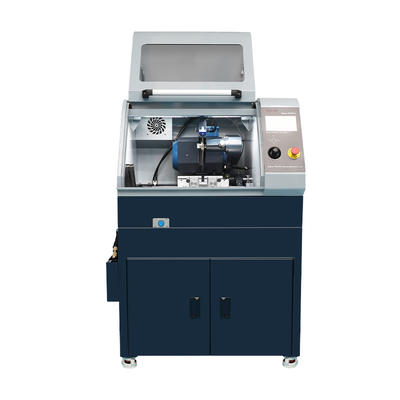
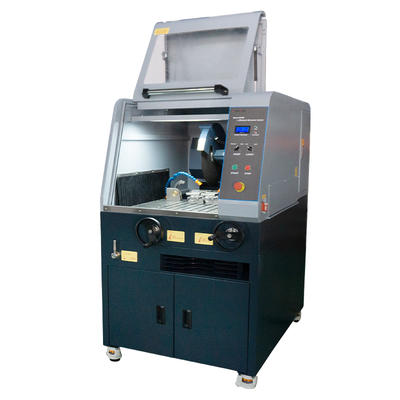
德语Beta-300Pro Automatic Abrasive Sectioning Machine
Beta-300Pro is a fully automatic vertical metallographic cutting machine. It utilizes advanced intel...
We use first- and third-party cookies including other tracking technologies from third party publishers to give you the full functionality of our website, to customize your user experience, perform analytics and deliver personalized advertising on our websites, apps and newsletters across internet and via social media platforms. For that purpose, we collect information about user, browsing patterns and device.
By clicking "Accept All Cookies", you accept this, and agree that we share this information with third parties, such as our advertising partners. If you prefer, you can choose to continue with "Only Required Cookies". But keep in mind that blocking some types of cookies may impact how we can deliver tailored content that you might like.
For more information and to customize your options, click on "Cookie settings". If you want to learn more about cookies and why we use them, visit our Cookie Policy page at any time. Cookie Policy

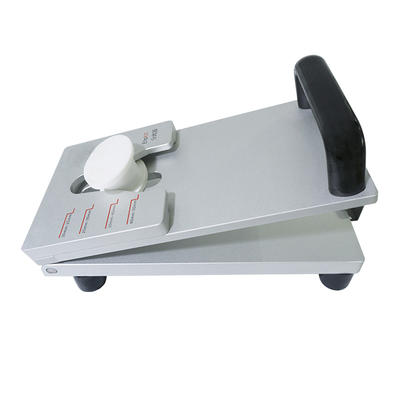
The semipol high precision quantitative grinding machine is an advanced industrial tool designed to provide exceptional accuracy in material processing. Unlike standard grinding machines, which often prioritize speed and general-purpose grinding, the semipol high precision quantitative grinding machine emphasizes controlled material removal, precise dimensional tolerances, and repeatable results. Industries such as precision engineering, metallurgy, and electronics manufacturing often require such high-accuracy grinding solutions to ensure product quality and compliance with stringent technical specifications.
Standard grinding machines are commonly used in manufacturing environments for material shaping, surface finishing, and rough dimensional adjustments. These machines are versatile and can process a wide range of materials, including metals, ceramics, and plastics. Standard grinding machines generally have the following characteristics:
While standard grinding machines serve well in many production scenarios, they can fall short when quantitative control of material removal and high precision tolerances are critical.
The semipol high precision quantitative grinding machine is designed to overcome the limitations of standard grinding machines by focusing on precision, repeatability, and controlled material removal. The core concept is the integration of quantitative control mechanisms that allow operators to set exact material removal amounts and achieve consistent results over multiple parts.
These features distinguish the semipol high precision quantitative grinding machine from standard models, providing a level of control that is essential in high-precision industries.
The differences between semipol high precision quantitative grinding machine and standard grinding machines can be categorized into several areas:
Standard grinding machines offer general accuracy suitable for most manufacturing tasks, but they cannot consistently achieve micron-level tolerances. In contrast, the semipol high precision quantitative grinding machine provides highly repeatable precision, which is essential for applications such as microelectronics, aerospace components, and medical devices.
One of the most significant differences is quantitative control of material removal. Standard machines rely on operator experience and visual inspection, which can lead to inconsistencies. Semipol high precision quantitative grinding machines use programmable systems and precise measurement sensors to control material removal for each grinding pass, ensuring uniformity across all workpieces.
Standard grinding machines can achieve acceptable surface finishes but often require additional processes to meet high-quality standards. The semipol high precision quantitative grinding machine provides superior surface finish due to its stable grinding mechanism, precise feed control, and optimized grinding wheel contact.
While some modern standard machines offer semi-automated features, they generally lack full digital integration for quantitative control. Semipol high precision quantitative grinding machines often come equipped with advanced software interfaces, programmable grinding sequences, and real-time monitoring, allowing operators to maintain precise control and minimize errors.
Industries that demand exact tolerances benefit most from the semipol high precision quantitative grinding machine. Examples include:
| Industry | Benefit of SemiPOL machine |
|---|---|
| Electronics | Micron-level component grinding |
| Aerospace | Precision parts with tight tolerances |
| Medical devices | Consistent surface finish and dimension control |
| Metallurgy | Controlled removal of high-hardness materials |
This table illustrates how the semipol high precision quantitative grinding machine addresses challenges that standard grinding machines cannot consistently overcome.
Operating a semipol high precision quantitative grinding machine requires understanding its technical and maintenance requirements. Compared to standard machines, it demands more precise setup, calibration, and monitoring to maintain performance.
Precise setup is critical for ensuring accurate grinding results. Operators must:
Maintenance for semipol high precision quantitative grinding machines focuses on preserving accuracy and repeatability rather than just operational longevity. Regular cleaning, lubrication, and sensor checks are essential to prevent deviations in grinding performance.
The semipol high precision quantitative grinding machine finds applications across multiple industries where accuracy, repeatability, and surface quality are critical:
These applications demonstrate the machine’s versatility and specialized utility, setting it apart from standard grinding machines.
The semipol high precision quantitative grinding machine is distinct from standard grinding machines due to its focus on quantitative control, high accuracy, repeatability, and advanced digital integration. While standard grinding machines remain suitable for general-purpose material processing, the semipol high precision quantitative grinding machine is indispensable for industries where precision, uniformity, and surface quality are critical.
By understanding these differences, buyers and operators can make informed decisions, ensuring that their production processes benefit from enhanced efficiency, reliability, and product quality.
.jpg?imageView2/2/w/400/format/jpg/q/75 "PL-W Polishing Lubricants")


Based in China, TROJAN pays attention to the international market, and has sold metallographic equipment to more than 50 countries, such as Europe, America, Japan and South Korea, Southeast Asia countries and regions


