
 英语
英语 西班牙语
西班牙语 德语
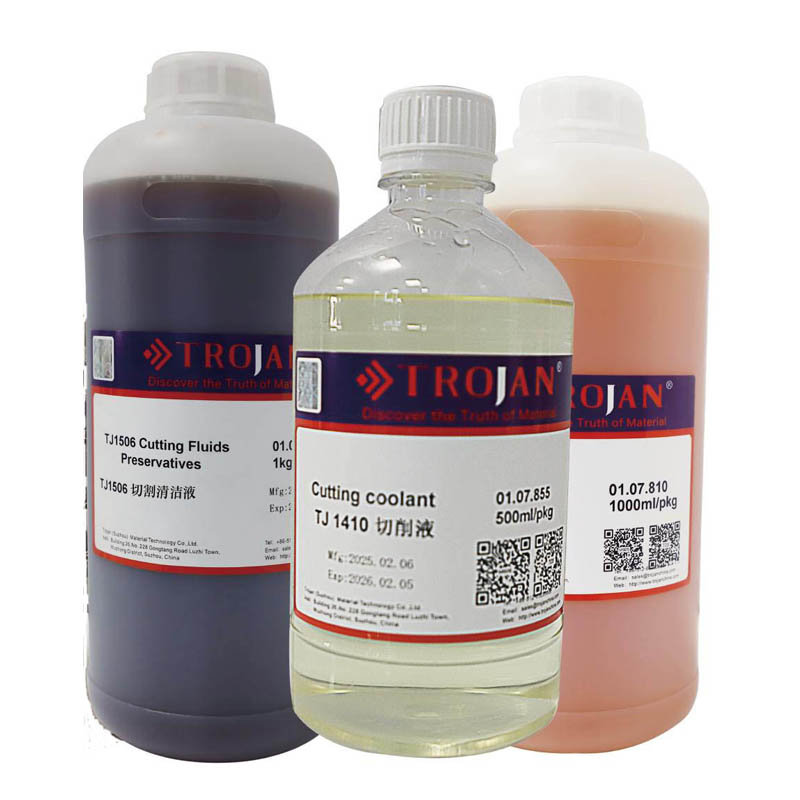
德语Cutting Coolant
Product Description
To achieve optimal cutting results and minimize thermal damage during metallogra...
We use first- and third-party cookies including other tracking technologies from third party publishers to give you the full functionality of our website, to customize your user experience, perform analytics and deliver personalized advertising on our websites, apps and newsletters across internet and via social media platforms. For that purpose, we collect information about user, browsing patterns and device.
By clicking "Accept All Cookies", you accept this, and agree that we share this information with third parties, such as our advertising partners. If you prefer, you can choose to continue with "Only Required Cookies". But keep in mind that blocking some types of cookies may impact how we can deliver tailored content that you might like.
For more information and to customize your options, click on "Cookie settings". If you want to learn more about cookies and why we use them, visit our Cookie Policy page at any time. Cookie Policy

A polishing machine uses controlled mechanical motion combined with abrasive media to remove surface irregularities, reduce roughness, and achieve a desired finish—ranging from matte to mirror-bright. The core principle is abrasive wear: abrasive particles cut micro-layers of material from the workpiece surface through repeated relative motion under applied pressure. Understanding this mechanism is essential for selecting the right machine type, abrasive grade, and operating parameters for any given application.
The working principle of a polishing machine revolves around three interacting elements: the drive mechanism, the polishing tool or pad, and the abrasive compound. The machine converts motor power into rotary, orbital, or linear motion. This motion is transmitted through a backing plate to the polishing pad, which carries the abrasive. When the pad contacts the workpiece under pressure, abrasive particles engage the surface and remove material or smooth asperities.
Two physical phenomena occur simultaneously: mechanical abrasion (particle cutting) and, in some wet-process machines, chemical-mechanical interaction where polishing slurry reacts with the surface layer to soften it before abrasive particles remove it. This is especially important in semiconductor wafer polishing, where surface flatness tolerances are below 1 µm.
| Motion Type | Mechanism | Typical Application |
| Rotary | Single-axis spin; high stock removal | Metal grinding, stone polishing |
| Random Orbital | Eccentric + rotary; reduces swirl marks | Automotive paint, wood finishing |
| Vibratory / Oscillating | Low-amplitude, high-frequency motion | Metallographic sample prep, jewelry |
| Lapping (Linear) | Flat plate with loose abrasive slurry | Precision optics, ceramic components |
Polishing machines are broadly classified by their operational mode and the materials they are designed to process. Selecting the correct type directly determines surface quality, cycle time, and consumable cost.
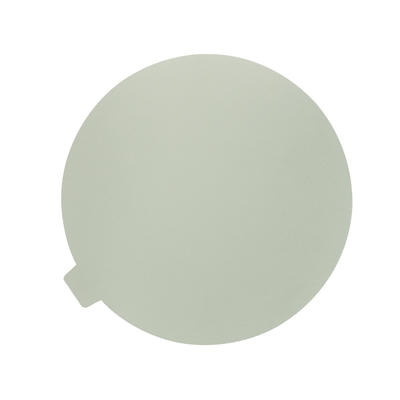
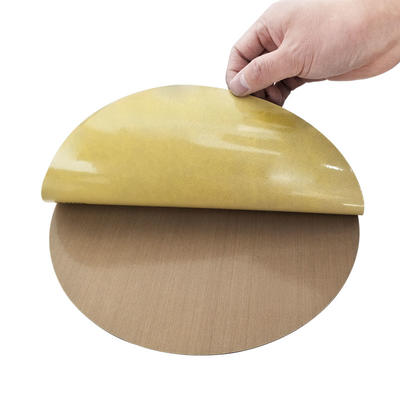
Used in laboratories for preparing cross-sections of metals, alloys, and composites. They feature a rotating platen—typically 200 mm or 250 mm in diameter—onto which abrasive discs or polishing cloths are mounted. Platen speeds commonly range from 50 to 600 RPM, and both single-specimen and multi-specimen holders are available. Automatic force control ensures consistent results across batches.
Designed for continuous production environments, these machines process flat or contoured metal, stone, or composite parts. Belt polishing machines use abrasive belts running at high speed (typically 10–35 m/s) for rapid material removal on flat workpieces. Disc polishing machines offer high surface contact area, making them suited for achieving Ra values below 0.1 µm on stainless steel or aluminum components.
Automated systems use programmed tool paths to polish complex three-dimensional geometries such as molds, turbine blades, and medical implants. Force sensors maintain consistent contact pressure—often controlled to within ±0.5 N—ensuring uniform surface finish across the entire workpiece regardless of geometry.
Batch-process machines that tumble many small parts together with abrasive media inside a vibrating bowl. They are highly efficient for deburring and surface finishing of bulk parts—cycle times of 2–8 hours can process hundreds of components simultaneously without manual handling.
In an abrasive polishing machine, the abrasive is the active cutting element. Its hardness must exceed that of the workpiece material; its grit size determines both removal rate and achievable surface roughness. Choosing incorrectly leads to either insufficient material removal or irreversible surface damage.
Effective polishing always follows a staged grit reduction sequence. Each stage must remove the damage layer introduced by the previous one before moving to a finer abrasive. A typical sequence for metallographic steel sample preparation:
Skipping a grit step to save time is counterproductive—it typically doubles total preparation time because coarser damage persists into later stages and requires far more polishing time to remove.
Even with the correct machine and abrasive, poor parameter settings lead to scratching, burning, rounding of edges, or excessive preparation time. The following variables must be controlled:
Surface finish is quantified primarily by roughness parameters. The most commonly specified value is Ra (arithmetic mean roughness). Understanding typical achievable values helps set realistic expectations:
| Process Stage | Abrasive Used | Typical Ra Achieved |
| Coarse grinding | P120–P240 SiC | 1.6–6.3 µm |
| Fine grinding | P600–P1200 SiC | 0.4–1.6 µm |
| Diamond polishing (3 µm) | 3 µm diamond suspension | 0.05–0.2 µm |
| Diamond polishing (1 µm) | 1 µm diamond suspension | 0.02–0.05 µm |
| Final (colloidal silica) | 0.04 µm OPS | <0.01 µm |
Mirror-finish surfaces—those with Ra below 0.025 µm—require diamond and colloidal silica as the final polishing agents and cannot be achieved with SiC abrasive paper alone.
The right machine choice depends on four factors: workpiece material, required surface finish, production volume, and geometry complexity.
Recognizing defect causes allows operators to correct process parameters before they compromise results:
| Defect | Likely Cause | Corrective Action |
| Deep scratches remaining | Grit stage skipped; contamination | Return to previous grit; clean specimens and equipment |
| Surface relief (uneven) | Polishing time too long; wrong cloth | Reduce time; use harder polishing cloth |
| Burning / discoloration | Excessive speed; insufficient coolant | Reduce RPM; increase water/lubricant flow |
| Edge rounding | Pressure too high; soft cloth | Reduce force; use resin-bonded disc or edge retention resin mounting |
| Comet tailing (pitting) | Pull-out of hard inclusions | Reduce applied force; use shorter polishing time per step |
A motor drives rotary or orbital motion through a polishing tool. Abrasive particles on the tool contact the workpiece surface under pressure, removing micro-layers of material to reduce roughness and improve finish.
All polishing machines use some form of abrasive. The term "abrasive polishing machine" specifically emphasizes systems where abrasive media—belts, discs, slurries, or loose grains—are the primary cutting element, as opposed to buffing machines that use non-abrasive compounds primarily for shine.
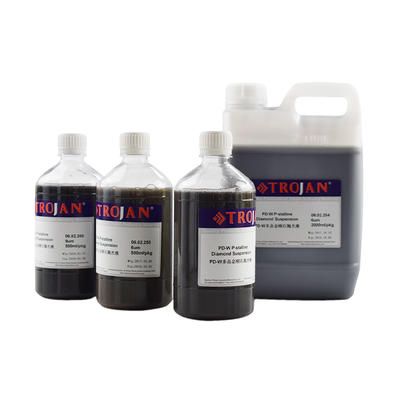
Colloidal silica (0.04–0.06 µm particle size) is standard for deformation-free mirror finishes on metals. Diamond suspension (0.25–1 µm) is used in intermediate fine-polishing stages before the colloidal silica step.
Use rotary for maximum stock removal and uniform flat surfaces. Use random orbital when swirl marks must be minimized—the eccentric path prevents repeating scratch patterns, making it better for paint, wood, and fine finishing applications.
The most common causes are skipping a grit stage, cross-contamination of abrasives between steps, or insufficient polishing time at a given stage. Clean the machine, specimen, and holder thoroughly between each grit change.
Yes, if the machine allows variable speed and accepts multiple abrasive disc types. The key requirement is using the correct abrasive for each material—diamond abrasives are mandatory for ceramics, while SiC or Al₂O₃ discs are sufficient for most metals.

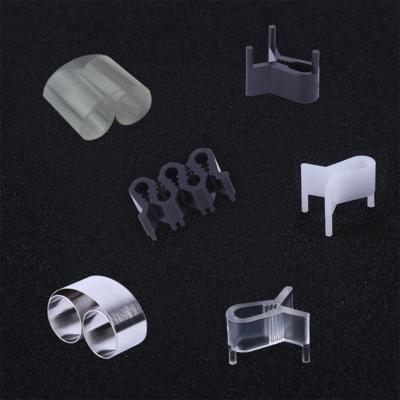
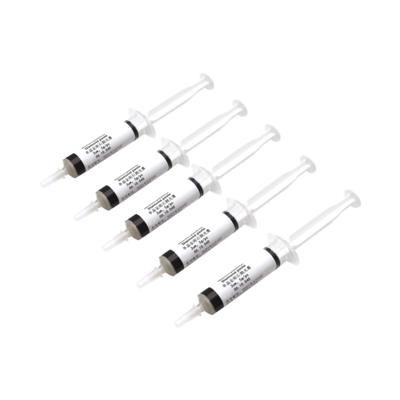
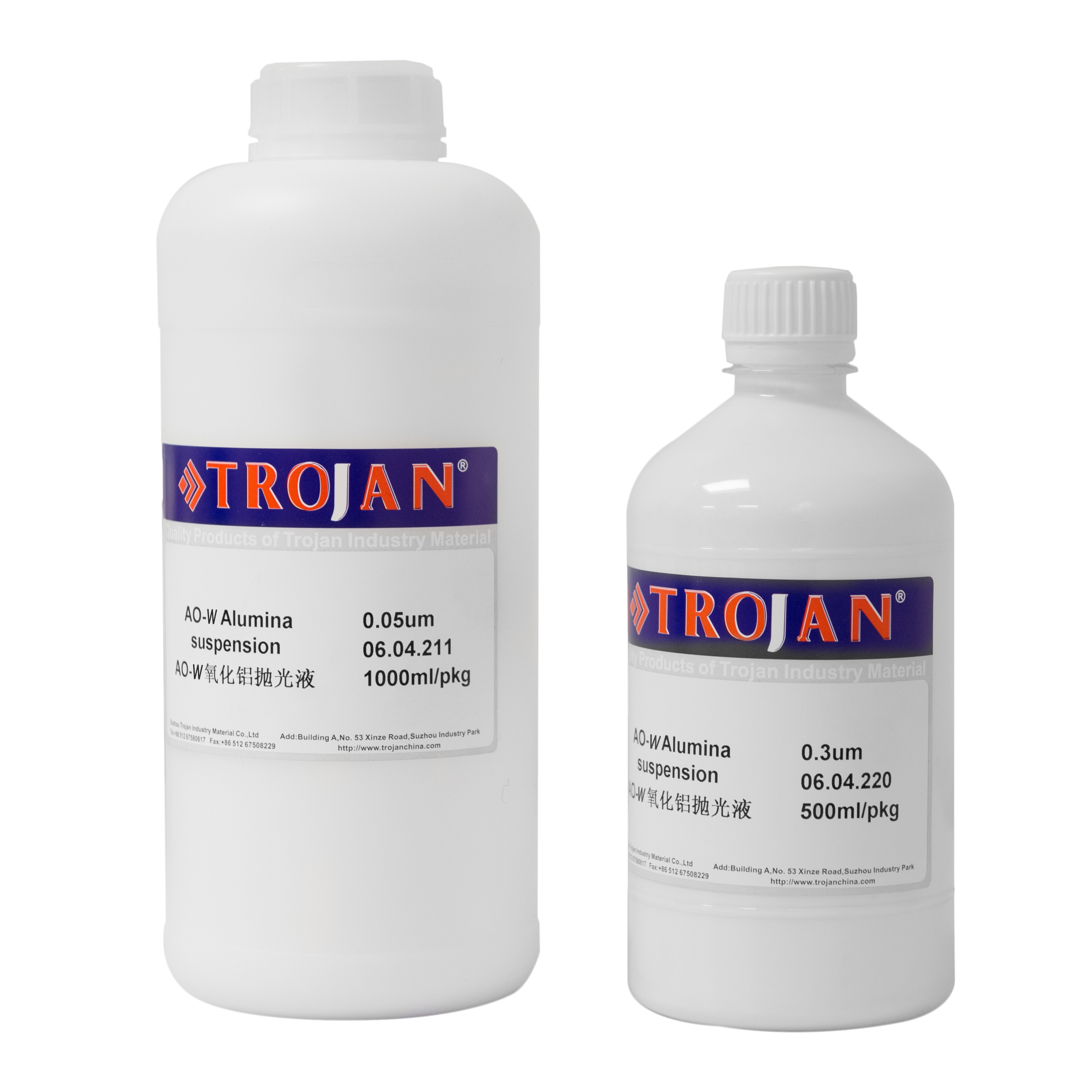
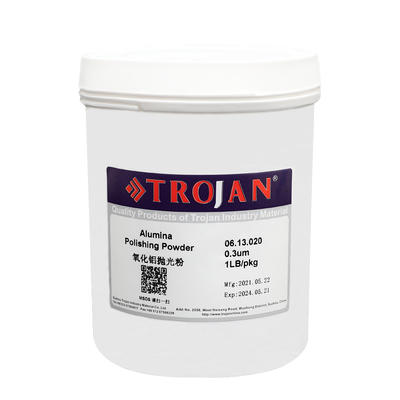

Based in China, TROJAN pays attention to the international market, and has sold metallographic equipment to more than 50 countries, such as Europe, America, Japan and South Korea, Southeast Asia countries and regions


