 英语
英语 西班牙语
西班牙语 德语
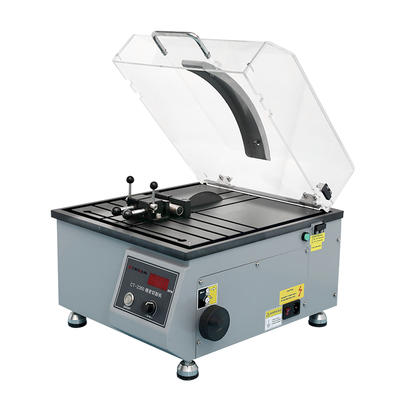
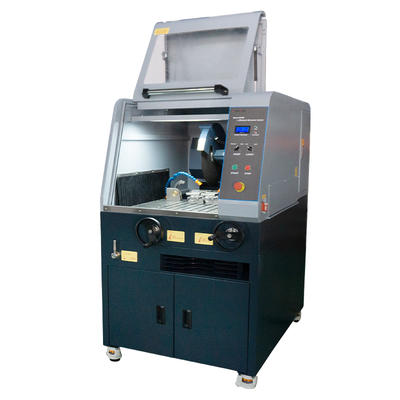
德语CT-2300 Manual Cut-off Machine
Product Description
CT-2300 is a compact, desktop Manual Cut-off Machine,widely used for cutting mat...
We use first- and third-party cookies including other tracking technologies from third party publishers to give you the full functionality of our website, to customize your user experience, perform analytics and deliver personalized advertising on our websites, apps and newsletters across internet and via social media platforms. For that purpose, we collect information about user, browsing patterns and device.
By clicking "Accept All Cookies", you accept this, and agree that we share this information with third parties, such as our advertising partners. If you prefer, you can choose to continue with "Only Required Cookies". But keep in mind that blocking some types of cookies may impact how we can deliver tailored content that you might like.
For more information and to customize your options, click on "Cookie settings". If you want to learn more about cookies and why we use them, visit our Cookie Policy page at any time. Cookie Policy

The foundation of any successful metallographic analysis begins with a comprehensive understanding of your laboratory's specific requirements. Before selecting any metallographic equipment, you must first evaluate the nature of materials you'll be examining, the frequency of analyses, the required precision levels, and your budget constraints. Different applications demand different equipment capabilities, and making an informed selection at the outset prevents costly mistakes and ensures efficient workflow integration.
Metallographic testing encompasses a broad spectrum of analytical needs, ranging from basic structural examination to advanced qualitative and quantitative analysis. Some laboratories focus exclusively on steel microstructure evaluation, while others require versatility to handle aluminum alloys, copper alloys, titanium, and specialty materials. The complexity of your applications directly influences the sophistication level of metallographic equipment and supplies you'll need to invest in.
Consider also the regulatory environment surrounding your work. Quality assurance departments in automotive, aerospace, and medical device manufacturing operate under stringent standards requiring documented procedures and traceability. Your equipment selection must support compliance with specifications such as ASTM E407, ISO 4427, and similar metallographic testing standards. This requirement often means selecting equipment that provides consistent, reproducible results and maintains proper calibration records.
Sample preparation represents the most critical phase of metallographic analysis. The quality of specimen mounting, grinding, and polishing directly determines the quality of microstructural images and subsequent analytical conclusions. Poor sample preparation can mask important microstructural features, introduce artifacts, or render results inconclusive. Therefore, selecting appropriate metallographic lab equipment for sample preparation deserves primary attention in your equipment selection process.
Specimen mounting equipment serves as the foundation for all subsequent preparation steps. Manual mounting presses work adequately for laboratories handling small specimen volumes with moderate frequency, typically preparing fewer than ten specimens weekly. Automated mounting systems prove invaluable when processing higher volumes, as they provide consistent mounting pressure, temperature control, and cooling cycles that manual equipment cannot achieve.
The choice between manual and automated systems depends on several factors: daily specimen throughput, available floor space, operator skill levels, and budget allocation. Automated systems require higher capital investment but deliver superior consistency, reduced operator variability, and documentation capabilities that facilitate quality compliance. Semi-automatic systems present a middle path, offering partial automation with reduced complexity and cost compared to fully automated platforms.
Grinding and polishing equipment represents the most visible and frequently used component of a metallographic lab. These systems condition specimen surfaces to the optical quality necessary for microscopic examination. The market offers several distinct categories: manual grinders and polishers for small-scale operations, semi-automatic systems balancing ease-of-use with consistency, and fully automated platforms for high-throughput laboratories requiring maximum reproducibility.
Choosing between these categories requires honest assessment of your operational scale. Manual systems remain economical for laboratories preparing five to fifteen specimens daily, where operators possess adequate skill and time for careful technique. Semi-automatic equipment becomes cost-effective when daily volume exceeds fifteen specimens or when operator consistency becomes problematic. Fully automated systems justify their investment primarily in large laboratories processing more than fifty specimens daily.
Surface finishing quality correlates directly with material type, hardness, and sample geometry. Equipment selection must account for the material spectrum your laboratory examines. Soft aluminum samples demand different grinding and polishing strategies than hard stainless steel or brittle ceramic specimens. Equipment featuring variable speed control, modular wheel configurations, and customizable protocols addresses this material diversity more effectively than single-purpose systems.
Microscopy equipment represents the observation platform through which all metallographic analysis occurs. Selecting appropriate microscope types and optical capabilities directly determines the types of analyses your laboratory can perform and the confidence level in results. The progression from basic optical microscopy to electron microscopy techniques involves substantial investment increases and operational complexity increases, yet each technology tier serves specific purposes.
Optical microscopes remain the workhorse of metallographic laboratories, offering excellent cost-effectiveness for routine microstructural examination. Modern optical microscopes provide magnifications from 50x through 1000x, adequate for most industrial metallography applications. Key considerations when selecting optical microscopy equipment include objective lens quality, stage mechanics, illumination systems, and digital imaging capabilities.
Laboratories performing routine quality control on forgings, castings, or welded components typically find optical microscopy sufficient for their analytical needs. Upright optical microscope configurations prove most versatile, accommodating various specimen geometries and facilitating ease-of-use for daily operations. Inverted configurations offer advantages for examining large components or conducting hot-stage observations but sacrifice some mechanical flexibility.
Digital imaging integration transforms optical microscopy from a purely observational tool into a quantitative analytical platform. Image capture systems enable precise grain size measurement, phase fraction determination, and inclusion analysis. When evaluating optical microscopy systems, prioritize software compatibility with standard metallographic analysis packages and ensure camera resolution matches your magnification requirements.
Beyond standard brightfield optical microscopy, specialized techniques address specific analytical challenges. Polarized light microscopy reveals crystal orientations and identifies certain phases invisible under conventional brightfield illumination. Darkfield microscopy enhances contrast for certain microstructural features. These specialized techniques require specific objective lenses and illumination modules compatible with your base microscope platform.
Scanning electron microscopy represents a significant capability increase, offering superior depth-of-field, much higher magnifications, and elemental analysis capabilities through energy-dispersive spectroscopy. However, SEM equipment demands substantial capital investment, dedicated laboratory facilities, and trained personnel. Most industrial laboratories justify SEM equipment only when examining fractured surfaces, analyzing inclusions, or performing detailed phase identification requires higher resolution than optical microscopy provides.
While equipment comprises the capital assets of your laboratory, metallographic supplies including etching reagents, polishing media, and grinding consumables represent the recurring expenses that fundamentally impact operational cost-per-analysis. Strategic sourcing and appropriate selection of these materials significantly affects both analytical quality and laboratory budget sustainability.
Etching reagents selectively attack different microstructural constituents, revealing crystal boundaries, phases, and structural features invisible in unetched specimens. The choice of etchant depends on material composition and which microstructural features require visualization. Ferric chloride works effectively for stainless steels, while Nital proves standard for carbon and alloy steels. Different materials demand different chemical approaches, and maintaining a well-organized etchant inventory proves essential.
Reagent quality and freshness directly impact etching consistency. Old reagents lose effectiveness, producing weak etching and poor microstructural contrast. Establishing usage protocols that track reagent age and establish replacement schedules maintains consistent analytical results. Safety considerations surrounding chemical handling require proper storage, disposal procedures, and operator training specific to each reagent type.
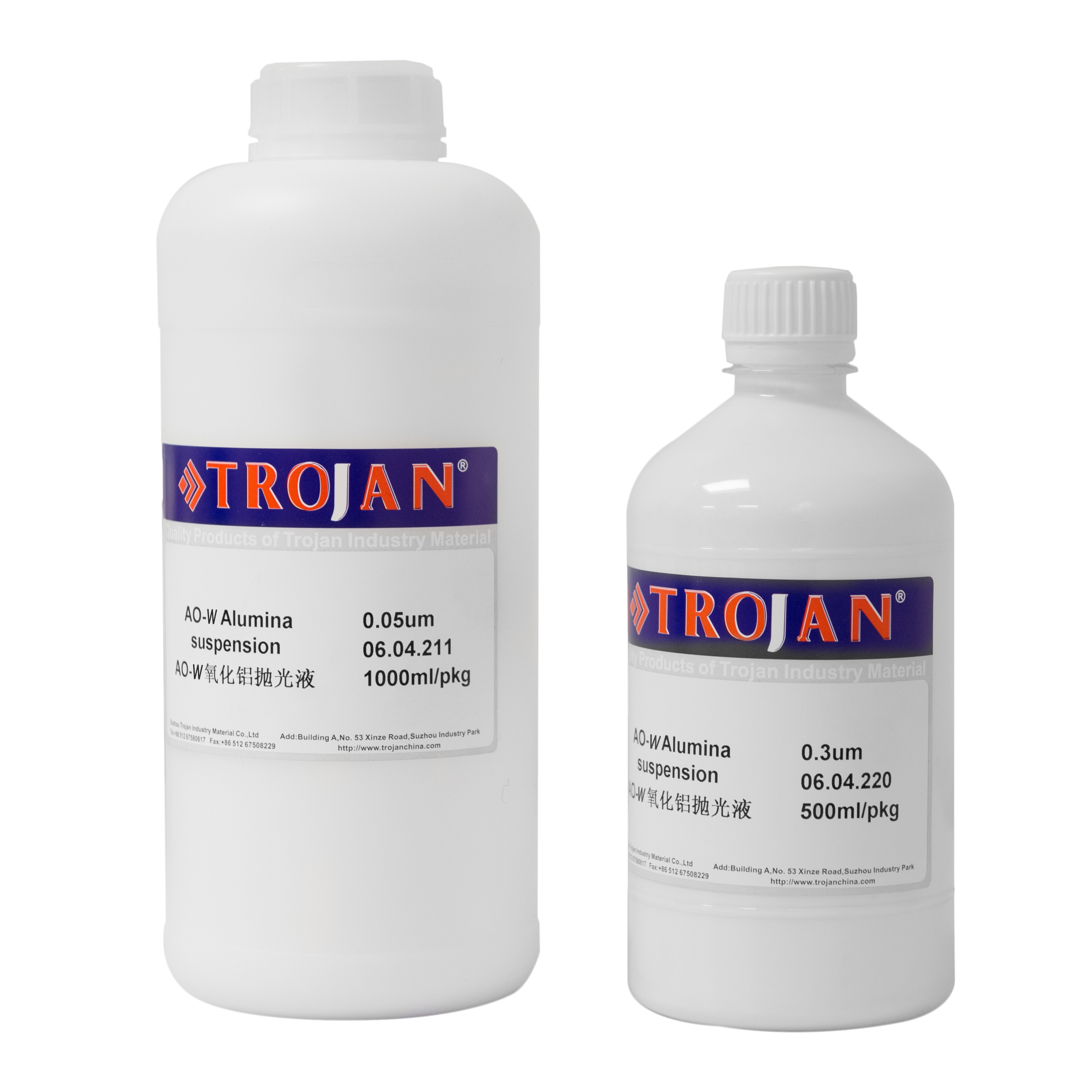
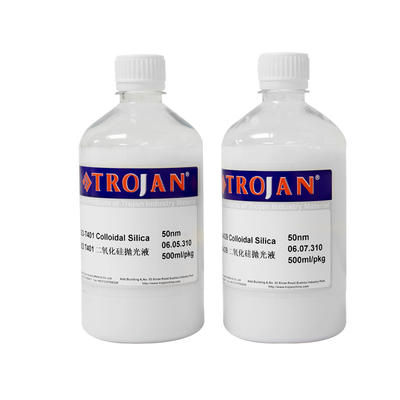
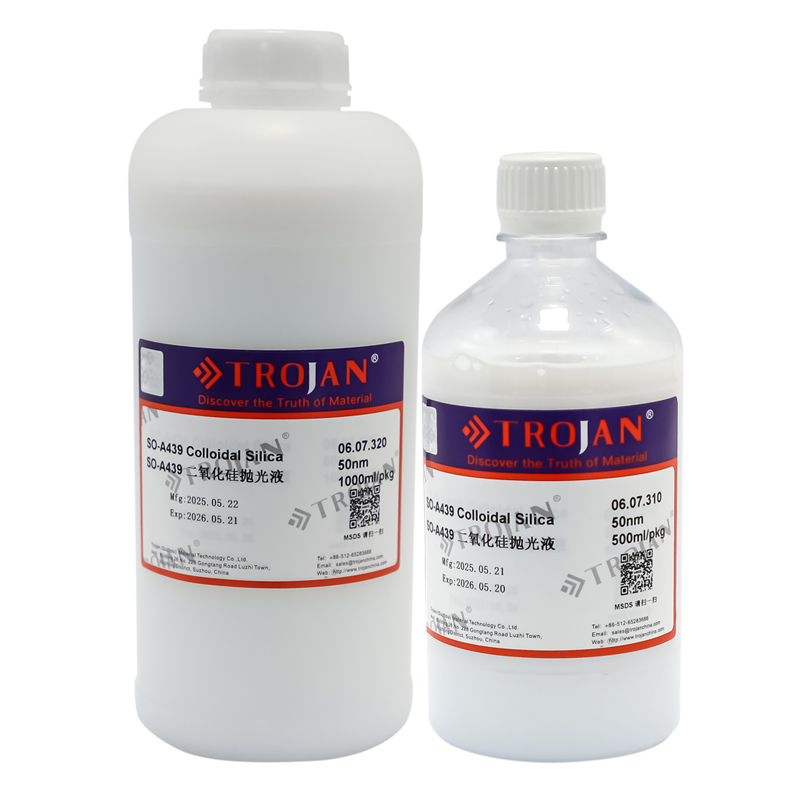
Grinding papers progress through grit sequences from coarse 80-grit through fine 600-grit and beyond, progressively refining specimen surfaces toward polishing stages. Polishing media include diamond suspensions, colloidal silica, and alumina compounds in various particle sizes. These consumable items directly affect surface quality achievable within your equipment constraints.
Higher quality abrasive products and polishing media require greater expenditure per unit but deliver superior results and often reduce time-per-specimen, offsetting material costs through improved efficiency. Conversely, attempting to economize through low-cost abrasives often backfires, extending preparation time and producing inferior results. Metallographic laboratories typically find that mid-to-premium grade consumables provide optimal cost-per-result balance.
Different industrial sectors and material types demand specialized equipment configurations optimized for their specific analytical challenges. Understanding how application requirements translate into equipment specifications enables intelligent purchasing decisions that prevent over-specification in some areas and under-specification in others.
Aerospace applications demand exceptionally rigorous metallographic analysis due to unforgiving operating environments and failure consequences. Titanium alloys, nickel-based superalloys, and aluminum lithium composites require equipment capable of handling difficult materials while maintaining analytical precision at the highest levels. These applications typically justify investment in semi-automatic grinding and polishing systems, optical microscopes with high-magnification capabilities, and often supplementary SEM analysis capabilities.
High-performance materials often present preparation challenges: titanium's reactivity with certain abrasives, superalloys' extreme hardness, and composites' heterogeneous structures demand equipment flexibility and operator expertise. Selecting equipment with proven track records in these material classes reduces risk and implementation time.
Automotive applications emphasize volume efficiency and cost-effectiveness while maintaining consistent quality standards. Casting analysis examining grain structure, shrinkage porosity, and segregation patterns benefits from automated or semi-automated sample preparation equipment handling high specimen volumes daily. Semi-automatic grinding and polishing systems prove particularly valuable in this sector, balancing equipment cost with operator efficiency and result consistency.
Weld analysis in automotive applications demands capability across carbon steels, stainless steels, and aluminum alloys, requiring versatile equipment accommodating material diversity. Equipment selection should emphasize flexibility alongside consistent repeatability across material types.
Failure analysis investigations and materials research demand maximum equipment versatility and analytical capability. These applications often examine unusual materials, complex geometries, or fractured surfaces requiring specialized preparation approaches. Equipment selections emphasizing flexibility over volume efficiency prove appropriate for these applications, even if achieving lower specimens-per-day throughput.
Fractography work particularly benefits from SEM capabilities revealing fracture surface features impossible to visualize optically. Research applications often justify investment in specialized equipment that single-purpose production labs might find economically unjustifiable.
Intelligent equipment selection requires viewing purchase decisions within a complete financial framework encompassing capital costs, ongoing consumable expenses, maintenance requirements, and operator labor. Equipment selected purely on initial capital cost often proves financially suboptimal when total cost of ownership is calculated.
Establishing a realistic capital budget requires understanding equipment tiers available for each function. Entry-level manual systems provide basic functionality at minimum cost but require experienced operators and afford limited consistency. Mid-range equipment balancing cost and capability proves appropriate for most industrial laboratories. Premium systems justify investment only when volume, complexity, or precision requirements clearly exceed mid-range equipment capabilities.
A typical mid-sized industrial metallographic lab equipped with semi-automatic sample preparation, optical microscopy with digital imaging, and basic accessories might require capital investment between established ranges depending on specific equipment selections. Spreading this investment across multiple fiscal years, prioritizing essential preparation equipment first, then microscopy, then specialized supplements, manages cash flow while maintaining analytical capability.
Monthly or annual consumable costs often exceed initial equipment investments over a five-to-ten year operational window. Grinding papers, polishing media, mounting materials, and etching reagents accumulate into substantial expenses. Equipment selections emphasizing efficiency can reduce per-specimen consumable costs even if initial equipment cost runs higher.
Some equipment designs consume abrasive and polishing media more efficiently than others, reducing waste and expense. Evaluating consumable costs through discussions with current equipment users and reviewing manufacturer efficiency ratings assists in this aspect of selection. Labor costs associated with equipment operation represent another significant component. Equipment requiring minimal operator training and attention translates to lower hourly cost-per-specimen even if equipment cost runs higher.
Equipment maintenance, calibration, and repairs represent hidden costs that only emerge after purchase. Some equipment designs prove inherently more reliable with minimal maintenance, while others require regular servicing to maintain performance. Inquiring about warranty coverage, maintenance intervals, and service costs before purchase prevents unpleasant surprises. Established vendors typically offer better support infrastructure than newer manufacturers.
Calibration requirements vary by equipment type and should be evaluated during selection. Microscope stage micrometer calibration, grinding wheel concentricity verification, and polishing pad replacement represent examples of maintenance tasks affecting accuracy. Understanding these requirements before purchase prevents operational disruptions.
Physical laboratory space constraints often influence equipment selection as forcefully as technical requirements. Before finalizing equipment decisions, assess available floor space, electrical infrastructure, ventilation requirements, and water access necessary for your planned equipment configuration.
Manual grinding and polishing systems occupy minimal floor space, while semi-automatic and fully automated equipment may require substantial dedicated areas. Establishing detailed space requirements with equipment manufacturers before committing to purchase prevents costly design compromises. Traffic patterns, maintenance access, and specimen storage near equipment improve workflow efficiency.
Microscope placement deserves particular attention. Optical microscopes require stable vibration-isolation benches away from sources of mechanical vibration. Adequate lighting, comfortable operator positioning, and integration with image capture systems demand thoughtful layout. Reserved space for monitor displays, computer systems, and accessories clusters around microscope stations.
Metallographic equipment power requirements vary substantially by type and automation level. Manual systems demand minimal electrical infrastructure while fully automated equipment may require dedicated electrical circuits. Water access becomes important for grinding and polishing equipment cooling systems, and drainage for wastewater handling. Ventilation requirements address dust from grinding operations and chemical vapors from etching processes.
Evaluating existing laboratory infrastructure against equipment requirements prevents expensive facility modifications after equipment arrives. Consulting with facility management and equipment vendors early in the selection process identifies potential limitations and enables cost-effective solutions.
Equipment selected for regulated industries must support documented quality control procedures and maintain traceability records satisfying standards requirements. Selecting equipment with built-in calibration verification, data logging capabilities, and integration with laboratory information management systems streamlines compliance burden while ensuring analytical integrity.
Microscope magnification verification, stage micrometer calibration, and sample preparation equipment performance verification represent routine calibration activities essential for maintaining analytical credibility. Equipment selections should facilitate these verification activities through design features such as convenient magnification check procedures and repeatable performance metrics.
Standard reference materials enable regular verification of grinding and polishing procedures, ensuring equipment continues producing specimens meeting established quality criteria. Equipment with good control systems and consistent performance facilitates standard material testing and generates data supporting compliance documentation.
Digital image capture systems integrated with microscopes enable permanent specimen documentation and archival. Equipment selections supporting integration with laboratory information systems facilitate automatic record generation satisfying compliance requirements. Some equipment provides built-in measurement and analysis software generating objective data supporting quality assertions.
Equipment selection extends beyond technical specifications to encompassing vendor reliability, local support infrastructure, training provision, and long-term partnership viability. Established vendors offering strong local support, comprehensive training, and responsive service often prove superior choices despite potentially higher equipment costs compared to unknown manufacturers.
Equipment representing substantial capital investment demands vendor commitment to operator training and ongoing support. Evaluating vendor capabilities regarding training program comprehensiveness, technical support responsiveness, spare parts availability, and repair service accessibility contributes meaningfully to long-term equipment satisfaction. Visiting vendor facilities, reviewing customer references, and assessing local representation provides tangible insight into support capability.
Speaking with current users of equipment models under consideration provides invaluable practical insight complementing manufacturer specifications. Asking specifically about reliability, consumable costs, support responsiveness, and operator satisfaction reveals real-world performance patterns. Industry conferences and professional societies often facilitate these connections.
Most laboratories cannot acquire their complete ideal equipment configuration immediately. Developing a phased acquisition strategy prioritizing essential capabilities first, supplemented with advanced features later, manages capital constraints while advancing laboratory maturity over time.
Sample preparation equipment typically receives priority as this represents the foundation upon which analytical quality depends. Manual or semi-automatic grinding and polishing systems should precede microscope investment, as poor sample preparation cannot be compensated by premium microscopy. Optical microscopy platforms follow preparation equipment as the basic observational tool. Specialized or advanced capabilities supplement these essential components as budget and workload justify.
Laboratories developing metallographic capabilities sometimes balance capital constraints through selective outsourcing of advanced analyses such as electron microscopy while developing in-house optical microscopy capabilities. This approach enables revenue-generating work to commence while deferring highest-cost equipment investments to future periods. Establishing relationships with service laboratories supporting specialized analyses creates valuable backup capability even after in-house equipment installation.
Learning from others' equipment selection errors accelerates your decision-making and prevents costly mistakes. Several recurrent patterns emerge in metallographic laboratory equipment selection processes.
Purchasing premium automated equipment when manual systems adequately serve your volume and precision requirements wastes capital and creates unnecessary operational complexity. Honestly assessing your actual needs prevents over-investment in functionality you'll never utilize. Conversely, under-specification creates persistent frustration and prevents analyses your workload demands, requiring disruptive upgrades.
Equipment selections should accommodate reasonable workload growth projections over the equipment's expected operational life. Undersizing equipment for anticipated growth creates bottlenecks and early obsolescence. Conversely, over-sizing for growth that never materializes represents capital inefficiency. Balancing these considerations requires realistic business forecasting and equipment selection flexibility.
Equipment selections optimizing capital cost while ignoring consumable costs often prove financially suboptimal. High-efficiency equipment reducing per-specimen consumable requirements may justify higher initial cost through total cost-of-ownership superiority. Requesting detailed consumable cost estimates during equipment evaluation illuminates this consideration.
Equipment sophistication demands corresponding operator expertise. Purchasing advanced equipment for personnel without adequate metallographic training creates poor utilization and mediocre results. Ensuring operator training accompanies equipment implementation prevents this failure pattern. Sometimes upgrading operator capabilities through additional training proves superior to equipment replacement.
The following table provides general guidance comparing equipment configurations appropriate for different laboratory scales and application profiles:
| Laboratory Profile | Sample Preparation | Microscopy Platform | Specimens Per Day |
| Small Job Shop | Manual Grinding and Polishing | Optical with Basic Imaging | 2-5 |
| Mid-Size Industrial | Semi-Automatic Systems | Optical with Digital Analysis | 15-30 |
| High-Volume QA | Fully Automated Systems | Optical with Advanced Software | 50+ |
| Research Institute | Semi-Auto with Versatility | Optical plus SEM Capability | 10-20 |
Manual equipment proves adequate when handling fewer than ten specimens weekly with operators possessing strong metallographic technique. Semi-automatic equipment becomes economically justified when daily volume exceeds ten specimens or when operator consistency becomes problematic. The break-even point typically occurs around fifteen to twenty specimens weekly, where semi-automatic efficiency advantages offset higher equipment costs. Consider also operator availability and workload variability affecting equipment utilization.
Most industrial metallographic applications operate within 50x to 500x magnification range. Lower magnifications reveal overall microstructural features and large-scale defects, while higher magnifications examine grain boundaries, precipitates, and fine structural details. Standard equipment providing 100x, 200x, 400x, and 1000x magnifications through objective and eyepiece combinations addresses most applications. Verify that your microscope provides adequate magnification for your specific material types and analytical requirements.
Most industrial quality control laboratories find optical microscopy adequate for routine material characterization. SEM investment becomes appropriate when analyzing fractured surfaces, identifying inclusions requiring elemental analysis, or examining materials where optical microscopy provides insufficient resolution. Research laboratories and failure analysis centers justify SEM investment more readily than production quality control facilities. Consider whether outsourcing SEM analyses to service laboratories proves more economical than in-house equipment investment.
Annual consumable costs for a typical industrial laboratory process three hundred to five hundred specimens annually typically range from twenty to forty percent of initial equipment capital cost. For high-volume operations processing more than one thousand specimens annually, consumable costs may exceed annual equipment capital cost depreciation. Efficient equipment designs and premium consumable materials often reduce total annual costs despite higher per-unit material costs through improved efficiency.
Microscope magnification should be verified semi-annually using calibrated stage micrometers, or more frequently if analytical work requires high precision. Objective lens cleaning and maintenance should occur monthly or as needed. Professional calibration services, typically costing three to five percent of equipment value annually, maintain accuracy and document compliance for regulated industries. Some laboratories maintain in-house calibration capability through trained personnel with appropriate tools.
Operators require initial training addressing grinding and polishing principles, equipment operation, material-specific preparation protocols, safety procedures, and quality standards compliance. Training typically requires one to three weeks for competency in standard materials and applications, with ongoing skill development for advanced or unusual materials. Equipment manufacturers typically provide initial operator training, and many laboratories designate senior operators as internal trainers for new staff. Inadequate training perpetuates quality and consistency problems throughout laboratory operations.
Request detailed maintenance schedules, estimated parts replacement intervals, and failure rate data from equipment vendors. Consult with current equipment users regarding actual reliability experience. Review warranty terms carefully, noting coverage duration and excluded items. Some manufacturers provide extended service contracts worth serious consideration. Visiting vendor facilities and observing equipment demonstration provides practical insight into durability and design robustness.
Planning for equipment evolution prevents costly incompatibilities during upgrades. Select equipment using standardized specimen mounting systems ensuring compatibility across future additions. Choose microscope platforms accommodating multiple objective types and accessories supporting future capability expansion. Modular sample preparation equipment design facilitates adding automated features to existing manual equipment. Consult vendors regarding upgrade pathways before initial purchase to ensure your starter system provides migration options toward advanced capabilities.


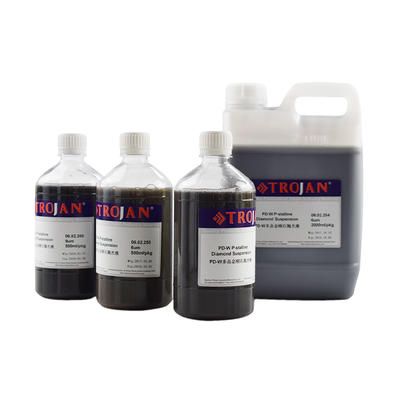



Based in China, TROJAN pays attention to the international market, and has sold metallographic equipment to more than 50 countries, such as Europe, America, Japan and South Korea, Southeast Asia countries and regions