
 英语
英语 西班牙语
西班牙语 德语
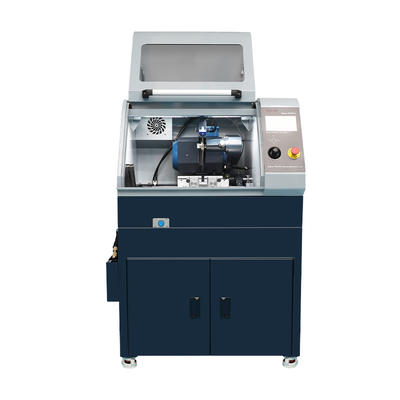
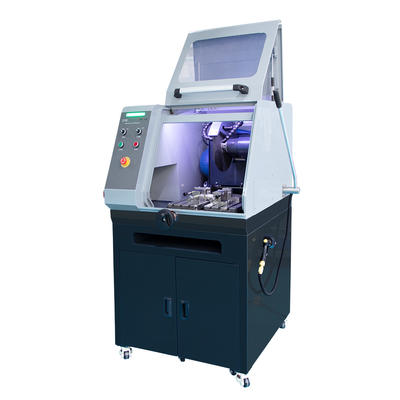
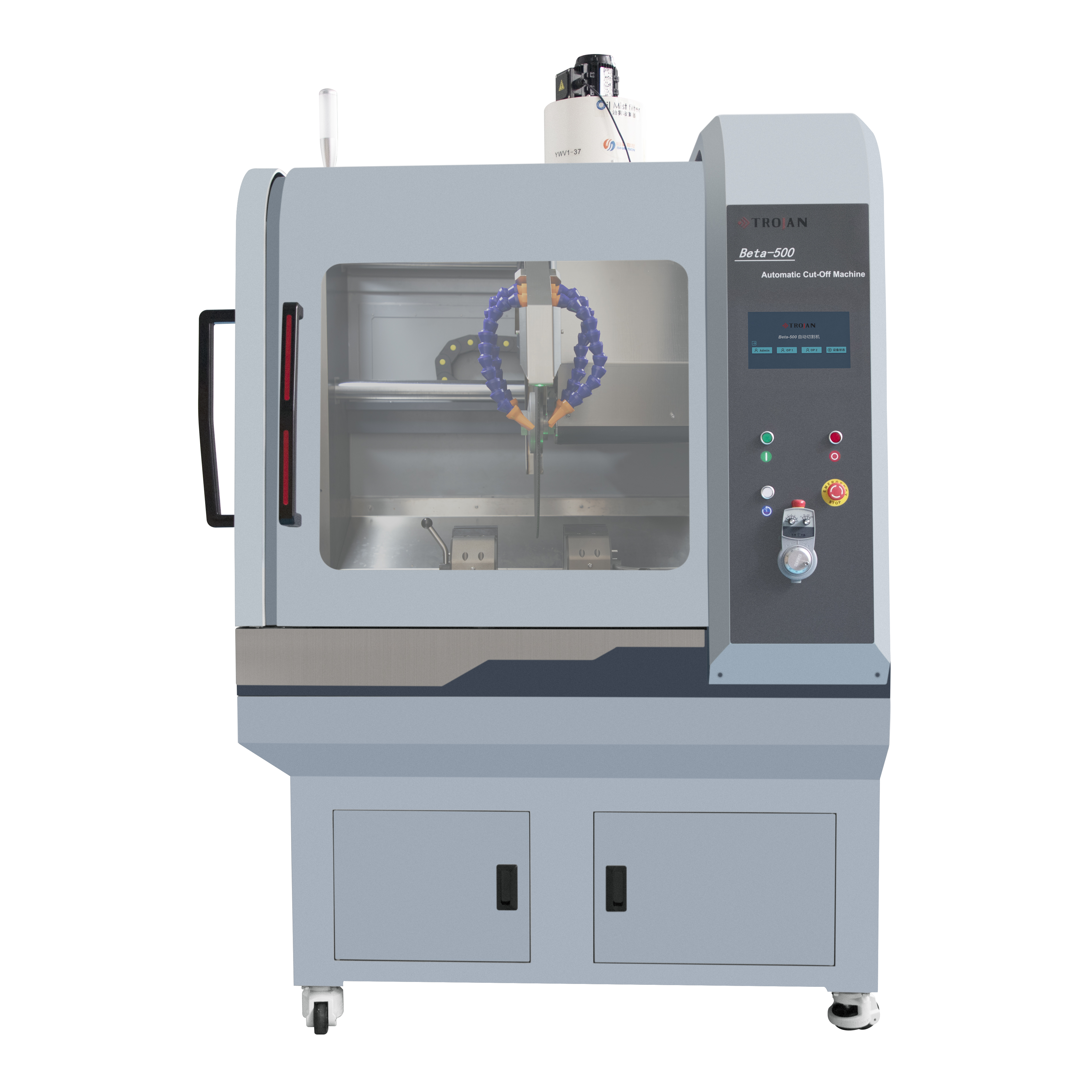
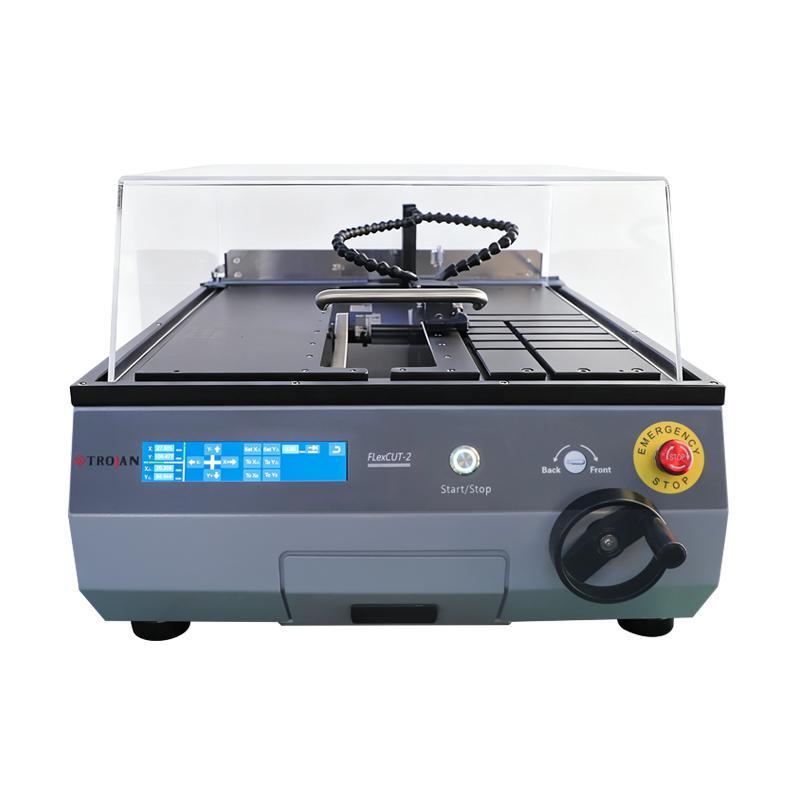
德语Beta-300Pro Automatic Abrasive Sectioning Machine
Beta-300Pro is a fully automatic vertical metallographic cutting machine. It utilizes advanced intel...
We use first- and third-party cookies including other tracking technologies from third party publishers to give you the full functionality of our website, to customize your user experience, perform analytics and deliver personalized advertising on our websites, apps and newsletters across internet and via social media platforms. For that purpose, we collect information about user, browsing patterns and device.
By clicking "Accept All Cookies", you accept this, and agree that we share this information with third parties, such as our advertising partners. If you prefer, you can choose to continue with "Only Required Cookies". But keep in mind that blocking some types of cookies may impact how we can deliver tailored content that you might like.
For more information and to customize your options, click on "Cookie settings". If you want to learn more about cookies and why we use them, visit our Cookie Policy page at any time. Cookie Policy

Epoxy bonding resins are widely used in industrial applications where strong adhesive performance, chemical resistance, and structural integrity are critical. Among various formulations, EP 1001 epoxy bonding resin (10:1) represents a stoichiometric mix ratio optimized for balancing mechanical strength and workability. Understanding how 10:1 systems perform relative to other mix ratios is essential for designing reliable bonded assemblies, especially in complex engineering systems.
Epoxy resins typically consist of a resin component and a hardener. The ratio of these components significantly affects the polymer network formation, curing behavior, and mechanical performance.
A stoichiometric mix ensures the correct proportion of reactive groups, enabling complete crosslinking. In EP 1001 epoxy bonding resin (10:1), the 10:1 ratio reflects the molar equivalence required for optimal cure and balanced mechanical properties.
Table 1: Typical Mix Ratios and Their General Characteristics
| Mix Ratio | General Properties | Typical Applications |
|---|---|---|
| 5:1 | Higher hardness, shorter pot life | Thin-film coatings, high-strength bonding in small assemblies |
| 10:1 | Balanced mechanical strength, moderate workability | Structural bonding, composite assembly, general industrial applications |
| 15:1 | Increased flexibility, longer working time | Encapsulation, vibration-damping joints, systems requiring stress relief |
Crosslink density determines the network stiffness and load-bearing capacity. Lower resin-to-hardener ratios often increase brittleness due to higher crosslink density, while higher ratios reduce rigidity but improve flexibility.
Mechanical performance metrics for epoxy systems include tensile strength, shear strength, peel strength, and impact resistance. EP 1001 epoxy bonding resin (10:1) is positioned to balance these parameters effectively.
Tensile strength reflects the maximum stress an epoxy joint can withstand under uniaxial tension.
Shear strength is critical in bonded assemblies subjected to sliding forces.
Peel strength indicates adhesion quality at interfaces with different materials.
Impact resistance is relevant for dynamic load applications.
Table 2: Mechanical Performance Comparison Across Mix Ratios
| Property | 5:1 | 10:1 (EP 1001) | 15:1 |
|---|---|---|---|
| Tensile Strength | High | Moderate-High | Moderate |
| Shear Strength | High | Moderate-High | Moderate |
| Peel Strength | Moderate | Moderate | High |
| Impact Resistance | Moderate-Low | Moderate | High |
| Flexibility | Low | Moderate | High |
Processing conditions, including mixing, pot life, and curing environment, influence the mechanical outcomes of epoxy bonding systems.
Precise measurement of resin and hardener is critical, particularly for stoichiometric 10:1 systems. Deviations can lead to:
Temperature and humidity control directly impact cure kinetics and final properties. 10:1 systems are generally more tolerant to moderate environmental variations compared to high- or low-ratio formulations.
Mechanical performance is also influenced by substrate properties. 10:1 systems offer good adhesion across metals, composites, and reinforced polymers, providing a balance between bond strength and stress distribution.
When evaluating epoxy bonding within a larger system, multiple factors must be considered beyond single-property performance.
10:1 systems provide a compromise between rigidity and toughness, allowing assemblies to tolerate moderate environmental stresses without catastrophic failure.
Systems incorporating stoichiometric 10:1 epoxies often exhibit predictable maintenance cycles due to consistent curing and mechanical behavior. Over- or under-ratio formulations may necessitate early inspections or replacements due to uneven stress response.
A comparative evaluation of epoxy bonding in composite panel assembly highlights system-level insights:
| Mix Ratio | Load Capacity | Deformation Under Stress | Observed Microcracking | Maintenance Frequency |
|---|---|---|---|---|
| 5:1 | High | Low | Present | Moderate |
| 10:1 | High-Moderate | Moderate | Minimal | Low |
| 15:1 | Moderate | High | Minimal | Moderate |
Insights:
EP 1001 epoxy bonding resin (10:1) occupies a practical position among epoxy formulations, offering balanced mechanical properties suitable for structural bonding in diverse applications. Relative to other ratios:
From a systems perspective, 10:1 epoxy systems support reliability, durability, and maintainable assemblies without excessive trade-offs in mechanical performance.
Q1: Why is a 10:1 mix ratio commonly used in industrial epoxy applications?
A: The 10:1 ratio provides a balanced stoichiometric reaction between resin and hardener, ensuring adequate crosslinking for mechanical strength while maintaining workability.
Q2: Can deviations from the 10:1 ratio affect performance?
A: Yes. Under-ratio may lead to incomplete cure and reduced strength, while over-ratio can increase flexibility but lower load-bearing capability.
Q3: Is EP 1001 suitable for high-impact applications?
A: It offers moderate impact resistance, suitable for assemblies where a balance between toughness and stiffness is required.
Q4: How does environmental exposure affect 10:1 epoxy performance?
A: Properly cured 10:1 systems maintain structural integrity under moderate temperature and humidity variations, though extreme conditions may require additional design considerations.
Q5: What substrates are compatible with 10:1 epoxy bonding?
A: Metals, composites, reinforced polymers, and other industrial materials benefit from strong adhesion and balanced mechanical properties with 10:1 systems.


Based in China, TROJAN pays attention to the international market, and has sold metallographic equipment to more than 50 countries, such as Europe, America, Japan and South Korea, Southeast Asia countries and regions


