
 英语
英语 西班牙语
西班牙语 德语
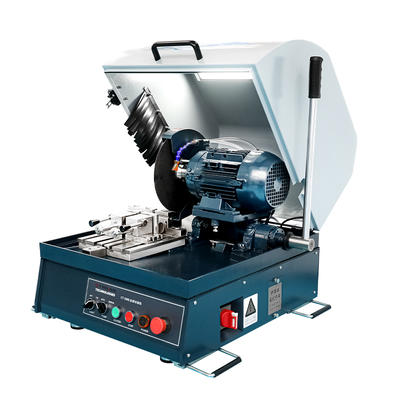
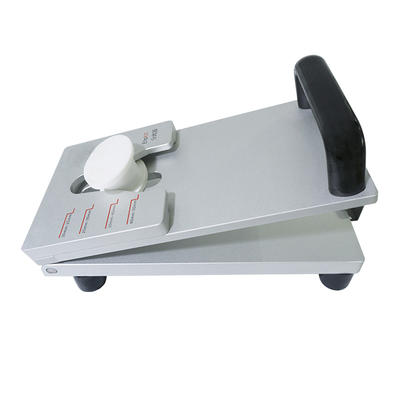
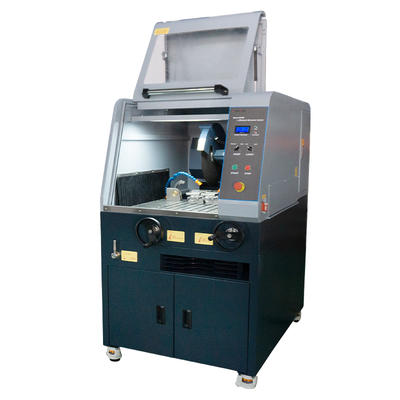
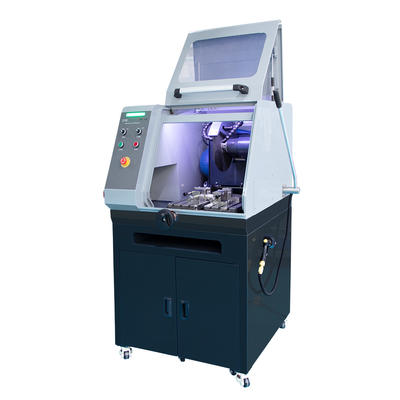
德语CT-250S/CT-250V Manual Sectioning Machine
CT-250S/250V is a manual sectioning machine designed with safety and environmental principles in min...
We use first- and third-party cookies including other tracking technologies from third party publishers to give you the full functionality of our website, to customize your user experience, perform analytics and deliver personalized advertising on our websites, apps and newsletters across internet and via social media platforms. For that purpose, we collect information about user, browsing patterns and device.
By clicking "Accept All Cookies", you accept this, and agree that we share this information with third parties, such as our advertising partners. If you prefer, you can choose to continue with "Only Required Cookies". But keep in mind that blocking some types of cookies may impact how we can deliver tailored content that you might like.
For more information and to customize your options, click on "Cookie settings". If you want to learn more about cookies and why we use them, visit our Cookie Policy page at any time. Cookie Policy

In material analysis and preparation workflows, hot mounting is a foundational process used to encapsulate samples in a support medium for subsequent sectioning, grinding, and polishing. The mechanical integrity of the mount directly influences the quality of microstructural observation and measurement. A critical factor in this integrity is the composition of the mounting compound, and specifically the inclusion of mineral fillers within the resin matrix.
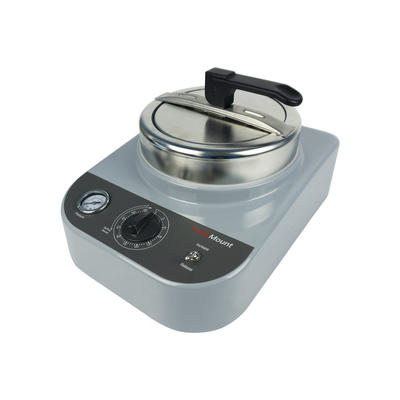
Hot mounting is a process in metallography and material analysis where a sample is embedded within a polymeric compound under temperature and pressure, forming a rigid assembly that facilitates precise sectioning and surface preparation. Thermal and mechanical parameters are controlled to achieve uniform encapsulation with minimal shrinkage and distortion. ([QATM][1])
The primary purposes include:
Without sufficient mechanical stability, the mount may deform, crack, or allow micro‑gaps between the mount and sample, compromising analytical accuracy.
Mechanical stability in a hot mount refers to its ability to resist deformation and preserve structural integrity under thermal, compressive, and shear stresses that occur during sample preparation. Key stability attributes include:
Mineral fillers have emerged as an established means to enhance these properties by modifying the polymer matrix structure.
Mineral fillers are defined as inorganic particles incorporated into polymeric resins to improve mechanical performance. Common examples include silica, alumina, glass beads, and other dense, hard particulates. While specific compositions vary by formulation, their contributions to stability operate through fundamental material mechanics.
The inclusion of mineral filler within a resin system alters the bulk compound in several ways:
These roles manifest in measurable improvements in hardness, stiffness, and edge fidelity during mechanical processing.
This section examines the core engineering mechanisms through which minerals strengthen hot mounting resins.
In a filled resin system, the polymer matrix and mineral particles form a heterogeneous composite. Under mechanical load (e.g., during polishing):
This mechanism is similar to fiber reinforcement principles in structural composites, albeit with isotropic particulate morphology.
Result: Enhanced resistance to indentation and abrasion — contributing directly to higher mechanical stability during surface finishing.
Polymer resins undergo volumetric shrinkage during thermal cure as chemical bonds form and relative free volume decreases. Shrinkage can:
Mineral fillers occupy volume that would otherwise be filled by cure‑induced polymer contraction, leading to:
The result is a more dimensionally stable mount with fewer microcracks and better edge retention — critical for high‑resolution analysis. ([AKASEL A/S][3])
Mineral fillers are inherently harder and more wear‑resistant than typical polymer matrices. When uniformly distributed within the cured compound:
Labs often associate mineral‑filled formulations with higher durometer hardness values, which correlate with better support of sample edges under abrasive processes. ([QATM][1])
Thermally induced deformation can compromise mount integrity, especially where curing cycles involve elevated temperatures and where subsequent grinding introduces heat.
Mineral fillers:
These effects enhance thermal stability, ensuring dimensional and mechanical consistency throughout the process cycle.
This section presents a comparison of mechanical properties for mounting compounds with and without mineral fillers in a system context.
| Property | Unfilled Polymer Mount | Mineral‑Filled Resin Mount |
|---|---|---|
| Hardness | Lower – polymer dominated | Higher – particulate reinforcement |
| Shrinkage | Higher, more internal stress | Lower due to filler volume displacement |
| Edge retention | Moderate | Enhanced due to rigidity and low shrinkage |
| Thermal resistance | Moderate | Improved due to constrained thermal expansion |
| Wear resistance | Lower | Higher due to hard particles |
Interpretation: Mineral‑filled resins generally outperform unfilled polymers across key mechanical stability dimensions relevant to hot mounting.
The choice of filler — size distribution, hardness, and surface chemistry — influences the resin composite’s behavior:
Engineering the filler matrix requires balancing these factors to optimize performance without compromising processability.
The polymer matrix must be compatible with the filler to achieve uniform dispersion and bonding:
Chemical coupling agents (e.g., silane coupling) are often used, although implementation depends on application specifics.
Mechanical stability does not depend solely on material composition; process conditions also matter:
Process optimization works synergistically with filled resin composition to maximize mount performance.
Considering typical workflows in material characterization, the inclusion of mineral fillers alters practical outcomes in several domains:
High mechanical stability preserves edge geometry even under aggressive grinding and polishing — critical when analyzing:
Data accuracy hinges on preserving as‑manufactured features throughout preparation.
Stable mounts reduce rework and sample loss:
This supports more predictable analytic pipelines.
Mineral‑filled mounts maintain integrity for advanced examination methods (e.g., high‑resolution optical microscopy, electron microscopy). The resilience of the mount supports high magnification and delicate imaging without sample disintegration.
The term “edge retention” refers to the degree to which a mount preserves a sample’s original contour and features during preparation.
Mineral‑filled formulations like MA‑2275 mineral‑filled edge retention hot mounting resin are engineered to improve this specific attribute. Industry sources note that mineral fillers significantly reduce shrinkage and improve mount hardness, leading to better edge fidelity and reduced rounding during polishing. ([AKASEL A/S][3])
These improvements are especially beneficial when preparing harder or heterogeneous materials where unsupported edges would otherwise chip or distort.
A systems engineering view recognizes that mechanical stability in hot mounting emerges from the interaction of:
Inadequate attention to any of these elements can degrade mount performance, regardless of filler content. Therefore, material design must be coordinated with process specifications and equipment capabilities to achieve reliable stability.
Mineral fillers improve mechanical stability in hot mounts through fundamental composite reinforcement mechanisms, including:
When integrated into resin matrices like MA‑2275 mineral‑filled edge retention hot mounting resin, these features produce mounts that withstand the mechanical and thermal demands of sample preparation workflows — enabling reliable and reproducible microstructural analysis.
Adopting such formulations within optimized hot mounting processes supports both analytical quality and throughput, particularly in high‑demand environments requiring precise material characterization.
Q1. What is the primary role of mineral fillers in hot mounting resins?
Mineral fillers enhance mechanical stability by reinforcing the polymer matrix, reducing shrinkage, and improving hardness and thermal stability, thereby preserving mount integrity under mechanical processing.
Q2. How does filler content affect edge retention?
Higher filler content generally reduces polymer shrinkage during cure and increases composite rigidity, which helps preserve sample edge geometry during grinding and polishing.
Q3. Are there trade‑offs in using mineral‑filled resins?
Yes — high filler content can increase viscosity and require more energy for mixing and processing, and may also influence cure kinetics.
Q4. Can mineral‑filled hot mounting resins be used for all material types?
While versatile, selection should consider sample hardness and sensitivity; some delicate materials might require alternative or customized formulations.
Q5. Does mineral filler improve the thermal stability of the mount?
Yes — mineral particles constrain thermal expansion and improve dimensional consistency during temperature cycles associated with curing and processing.

Based in China, TROJAN pays attention to the international market, and has sold metallographic equipment to more than 50 countries, such as Europe, America, Japan and South Korea, Southeast Asia countries and regions


