
 英语
英语 西班牙语
西班牙语 德语
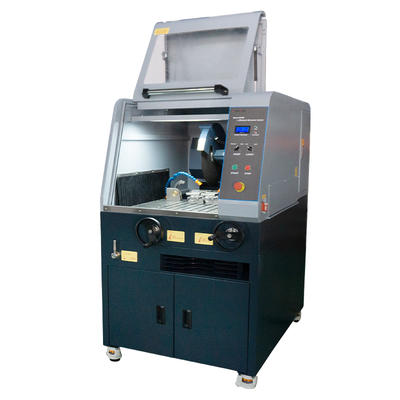
德语CT-2300 Manual Cut-off Machine
Product Description
CT-2300 is a compact, desktop Manual Cut-off Machine,widely used for cutting mat...
We use first- and third-party cookies including other tracking technologies from third party publishers to give you the full functionality of our website, to customize your user experience, perform analytics and deliver personalized advertising on our websites, apps and newsletters across internet and via social media platforms. For that purpose, we collect information about user, browsing patterns and device.
By clicking "Accept All Cookies", you accept this, and agree that we share this information with third parties, such as our advertising partners. If you prefer, you can choose to continue with "Only Required Cookies". But keep in mind that blocking some types of cookies may impact how we can deliver tailored content that you might like.
For more information and to customize your options, click on "Cookie settings". If you want to learn more about cookies and why we use them, visit our Cookie Policy page at any time. Cookie Policy

Resins that combine structural integrity with electrical conductivity are essential for a range of technical applications such as microstructural mounting, electronic material testing, and high‑reliability assembly environments. A well‑optimized resin formulation enables predictable performance, consistent behavior across batches, and long‑term stability under operational stresses. DC‑2239 conductive hot mounting resin represents a class of fully formulated, high‑performing conductive resins used for embedding and mounting specimens prior to analytical characterization or functional integration.
Electrical resistance within a resin composite is dictated by the formation of a conductive network throughout the non‑conductive polymer matrix. Several intrinsic parameters impact this:
Understanding these aspects at a materials level is essential before optimizing formulation.
Stability is a multi‑dimensional metric that includes:
A comprehensive optimization strategy must balance these against electrical resistance, often requiring trade‑offs.
Selecting the appropriate conductive filler is central to formulation:
Each filler type presents distinct advantages and considerations. The choice must be made with respect to intended operational environments and performance targets.
The resin matrix itself plays a vital role:
Matrix attributes fundamentally influence how fillers interact and how the final composite behaves.
In complex composites, how the filler interacts with the resin determines network formation and stability. Key considerations include:
This interphase region, though microscopically thin, exerts an outsized influence on both electrical and mechanical outcomes.
The conductive network is the backbone of low resistance. Achieving this involves:
Designing beyond simple filler loading often yields more predictable and efficient conductive networks.
Optimizing flow and handling characteristics ensures the formulation can be reliably processed:
Rheology is often the bridge between laboratory formulation and scalable production.
High filler content may help conductivity but can compromise flexibility or thermal expansion characteristics. Successful formulations address:
This balance is context-dependent and often requires iterative formulation adjustments.
Curing protocols significantly affect final material characteristics:
Detailed thermal profiling and data logging help refine process control.
Applied pressure during cure can:
Pressure considerations are especially salient in thick or multi‑layered constructs.
After initial cure, additional steps may improve stability:
Post‑processing routines are often under‑emphasized but can be as impactful as initial formulation.
Key electrical metrics include:
Systematic electrical characterization ensures formulation targets are met.
Resins must be evaluated for:
High‑resolution techniques can detect micro‑scale changes that herald performance degradation.
Testing beyond nominal conditions, such as:
These assessments validate long‑term stability.
Optimized resin formulations must integrate into larger systems. This includes:
An engineering approach that considers the full system lifecycle improves predictability and reduces integration risk.
The table below summarizes key formulation elements and their typical impact on performance metrics:
| Parameter Category | Impact on Electrical Resistance | Impact on Stability |
|---|---|---|
| Filler Type | High (different conductive pathways) | Varies (thermal expansion, oxidation resistance) |
| Filler Loading | Strong (reduced resistivity up to percolation) | Moderate (dense packing can affect mechanical flexibility) |
| Particle Size Distribution | Moderate (affects network connectivity) | Moderate (influences packing and differential expansion) |
| Matrix Resin Viscosity | Indirect (affects filler dispersion) | Significant (affects curing uniformity and void formation) |
| Cure Temperature Profile | Indirect (network solidification) | Strong (degree of cure influences stability and aging) |
| Pressure During Cure | Strong (improves contact between particles) | Moderate (reduces voids, can affect internal stress) |
| Surface Treatment of Fillers | Moderate (enhanced contact connectivity) | Significant (improved interfacial adhesion, reduced voids) |
A resin system designed for low resistance and high stability was evaluated across a series of iterative formulation changes. Key observations included:
Through embedding rigorous test protocols and iterative adjustments, the formulation achieved a balanced profile aligned with operational requirements.
Optimizing resin formulations for low resistance and high stability requires a systems engineering approach that balances material science, process control, characterization, and application context. Key aspects include:
By applying structured optimization strategies, stakeholders can develop conductive resin systems that meet demanding performance criteria in real‑world applications.
Q1: Why is balancing filler loading and mechanical stability important?
A1: Excessive filler loading can reduce resistivity but may compromise mechanical properties by introducing rigidity and increasing stress concentrations, leading to cracking or poor dimensional behavior.
Q2: What role does particle size distribution play in resistivity?
A2: A gradation of particle sizes can enhance packing density and conductive network continuity, leading to lower resistivity and improved stability.
Q3: How does thermal cycling affect resin performance?
A3: Repeated temperature changes can induce expansion and contraction, potentially weakening interfaces and increasing resistance over time if not properly formulated.
Q4: Is post‑curing always necessary?
A4: Post‑curing can improve network consolidation and stability, particularly in high‑performance applications where long‑term reliability is critical.
Q5: How are environmental conditions incorporated into performance evaluations?
A5: Through accelerated aging tests, humidity chambers, and chemical exposure assessments that simulate operational environments to validate long‑term performance.

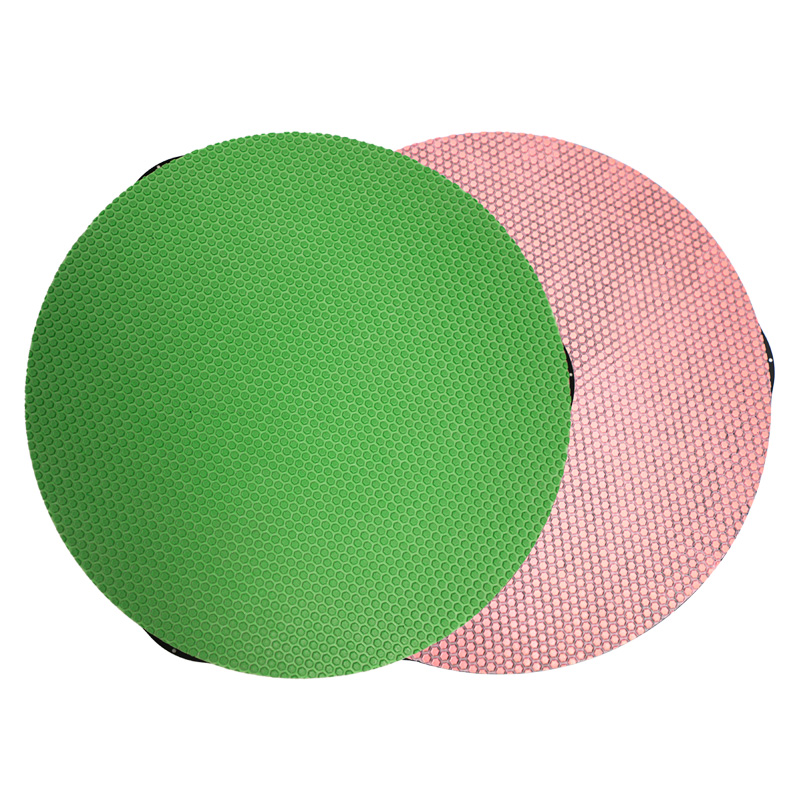
.jpg?imageView2/2/w/400/format/jpg/q/75 "Abrasive Wheels")
.png?imageView2/2/w/400/format/jpg/q/75 "Disposable Sample Cups")
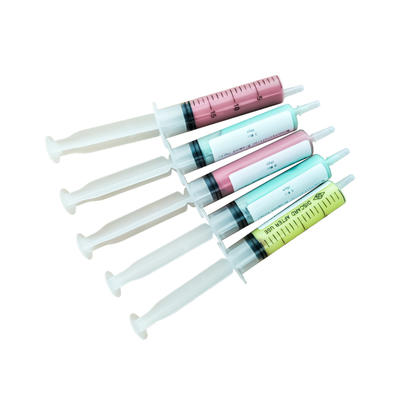
.jpg?imageView2/2/w/400/format/jpg/q/75 "MD-WT Monocrystalline Diamond Suspension")

Based in China, TROJAN pays attention to the international market, and has sold metallographic equipment to more than 50 countries, such as Europe, America, Japan and South Korea, Southeast Asia countries and regions


