
 英语
英语 西班牙语
西班牙语 德语
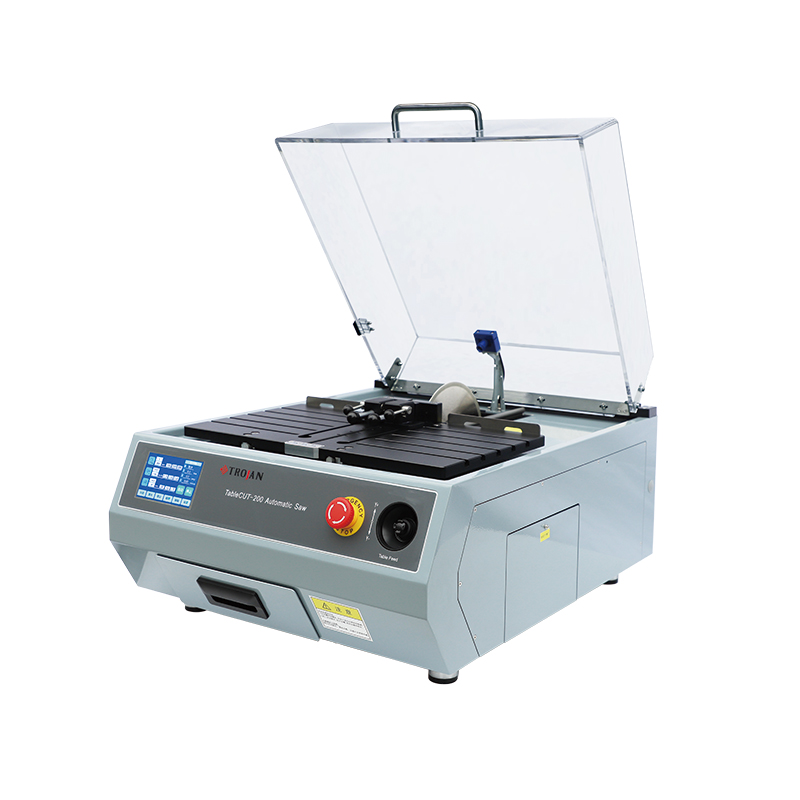
德语TableCUT-200 Automatic Precision Cut-Off Machine
Product Description
TableCUT-200 is automatic precision cut-off machine, equipped with various fixtu...
We use first- and third-party cookies including other tracking technologies from third party publishers to give you the full functionality of our website, to customize your user experience, perform analytics and deliver personalized advertising on our websites, apps and newsletters across internet and via social media platforms. For that purpose, we collect information about user, browsing patterns and device.
By clicking "Accept All Cookies", you accept this, and agree that we share this information with third parties, such as our advertising partners. If you prefer, you can choose to continue with "Only Required Cookies". But keep in mind that blocking some types of cookies may impact how we can deliver tailored content that you might like.
For more information and to customize your options, click on "Cookie settings". If you want to learn more about cookies and why we use them, visit our Cookie Policy page at any time. Cookie Policy

Porcelain resists scratches, chips, and everyday wear better than most people expect. That resilience comes from the material itself, not from a coating. On the Mohs scale, porcelain typically sits between 6 and 7, which places it above carbon steel (4 to 5) and ordinary glass (5.5), though below quartz (7) and tungsten carbide (7.5 to 8). This single range explains why porcelain tile floors survive heavy foot traffic, why porcelain tableware keeps its glaze for decades, and why a porcelain vase can scratch a steel knife. Hardness is not just a decorative attribute. It determines how well the surface resists abrasion, whether it can be cut or drilled, and how long it will look new.
The Mohs scale is a relative hardness scale introduced by Friedrich Mohs in 1812. It ranks minerals and materials by their ability to scratch another material. A higher number means the material is harder. Ten reference minerals form the backbone of the scale, from talc at 1 to diamond at 10. For everyday materials, the scale works well because it allows quick comparisons without laboratory equipment.
Porcelain is not a single mineral. It is a fired ceramic made from feldspar, quartz, kaolin, and other raw materials. As a result, its hardness varies with composition, firing temperature, and glaze chemistry. Most commercial porcelain falls in the 6 to 7 range on the Mohs scale. High-alumina porcelain formulations and technical ceramics can reach 7.5 or higher, while underfired or porous bodies may sit closer to 5.5 or 6.
| Material | Mohs Hardness | Typical Uses |
|---|---|---|
| Carbon steel | 4 to 5 | Tools, structural components |
| Window glass | 5.5 | Glazing, bottles |
| Porcelain tile | 6 to 7 | Flooring, wall cladding |
| Quartz | 7 | Engineered stone countertops |
| Tungsten carbide | 7.5 to 8 | Cutting tools, wear parts |
This table shows why comparing porcelain to steel is not accurate in the way most people expect. A steel knife blade is harder than porcelain in terms of toughness, but porcelain is harder in terms of scratch resistance. The distinction matters because the two properties are different. Scratch resistance reflects a material's ability to resist local plastic deformation, while toughness measures resistance to crack propagation.
Porcelain hardness changes during the firing process. The raw materials and thermal treatment combine to produce a dense, vitrified body with crystalline phases embedded in a glassy matrix. Understanding these factors helps buyers and processors predict how the surface will behave over time.
Feldspar and quartz are the main sources of hardness in porcelain. Quartz grains remain embedded in the ceramic matrix after firing, acting as hard particles that resist scratching. Kaolin and clay provide plasticity during forming but contribute less to final hardness. Manufacturers that increase the alumina content in the body can push porcelain hardness toward the upper end of the range, which is why porcelain tiles used in heavy commercial environments are often formulated with additional alumina.
Higher firing temperatures typically produce a more vitreous body with fewer open pores. The glassy phase formed during vitrification fills gaps between crystalline particles, creating a denser and harder surface. Porcelain fired at 1200 to 1400 degrees Celsius is generally harder than stoneware fired at lower temperatures. In practice, porcelain is distinguished from ceramic tile by its higher firing temperature, lower water absorption, and denser structure.
The glaze applied to porcelain surfaces also affects measured hardness. A fired glaze is itself a vitreous layer with a hardness near 6 to 7 on the Mohs scale. Some manufacturer's add hard minerals to the glaze, such as alumina or zircon, to improve scratch resistance. However, a softer glaze on a hard body can still be scratched by harder particles like quartz sand or aluminum oxide abrasives.
For laboratory analysis, the grinding and polishing of ceramic surfaces requires careful attention, because the same hardness that makes porcelain desirable also makes sample preparation more demanding. A dedicated sample preparation workflow helps achieve the flat, scratch-free surface needed for reliable hardness measurements.
Hardness directly affects how porcelain performs in three common situations: flooring, tableware, and industrial components. In flooring, harder porcelain resists wear from shoe sole grit, which can contain quartz particles harder than the tile surface. The standard PEI rating for tile wear and abrasion often correlates with both hardness and density. A porcelain tile with Mohs 7 is significantly more scratch-resistant than a ceramic tile rated at 4 to 5.
In tableware, surface hardness influences whether knife marks appear on the glaze over time. Harder glazes keep the polished appearance longer under repeated contact with cutlery. Yet porcelain tableware is still subject to chipping because hardness does not equal impact toughness. A hard glaze may resist scratches but still chip if the underlying body is weak.
In industrial components, porcelain and technical ceramics are used for insulators, bearings, pump parts, and electrical components. The hardness of these parts determines their useful life against abrasive wear. Engineers select specific ceramic formulations based on hardness targets, often verified with quantitative hardness data obtained from lab equipment.
The Mohs scale offers a simple relative answer, but it does not produce repeatable numeric values. When a manufacturer needs to verify a porcelain batch, or when a researcher wants to compare formulations, a quantitative hardness test provides the reliable data. For ceramics and porcelain, the Vickers method is the standard approach because it uses a diamond indenter that works well on brittle, hard materials.
Vickers hardness testing applies a known load through a diamond pyramid to the specimen surface. The diagonals of the resulting indentation are measured, and the hardness value is calculated from the load and the contact area. Because the indenter is diamond, it can test porcelain and technical ceramics without deformation of the indenter itself. The HV-5 Vickers hardness tester is suitable for routine hardness checks on ceramic specimens with low to moderate loads.
For finer analysis, such as measuring hardness at different points across a glaze layer or observing microstructural changes, a micro-Vickers system offers greater precision. The HVS-1000A digital micro-Vickers hardness tester applies smaller test loads and allows users to measure hardness with high repeatability on a microscopic scale. Choosing between the two depends on the required indentation size and the scale at which you need information.
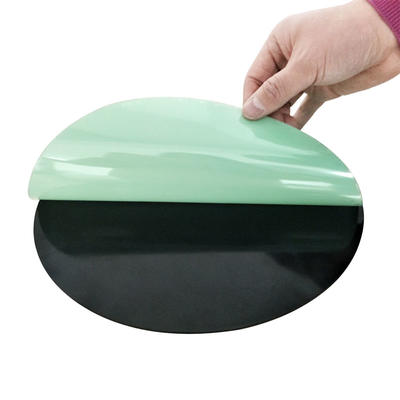
In any case, the specimen must be properly prepared. Porcelain surfaces require planar grinding and polishing to remove scratches from previous operations. A scratch-free surface gives a clean indentation outline, which reduces reading errors. Selecting the right polishing cloth is part of building a reliable work flow for ceramic sample preparation.
Several factors affect the success and reliability of hardness tests on porcelain. The first is surface roughness. A rough surface leads to irregular indentations and inaccurate diagonal measurements. Grinding with an appropriate abrasive sequence and polishing down to at least a 1 micron finish is advisable before testing.
The second factor is load selection. Porcelain is brittle, and loads that are too high may cause cracking around the indentation or propagate median cracks. An ideal indentation for Vickers hardness testing is between 20 and 70 microns across the diagonal. In practice, a load between 0.3 kgf and 1 kgf works well for many porcelain bodies, depending on their dense or porous structure. Soft or porous porcelain may require lower loads to avoid subsurface damage.
The third factor is the number of indentations. Hardness in porcelain is not perfectly uniform because the body contains both hard crystalline grains and softer glassy phases. Performing at least five indentations and averaging the results provides a statistically better estimate than a single reading. For glaze layers, the indentation depth must remain within the glaze thickness; otherwise the substrate hardness changes the result.
Finally, make sure the hardness data is comparable. Different load levels produce slightly different Vickers hardness values. When comparing porcelain batches, both the test load and the indentation dwell time should be reported. This prevents misinterpretation when data comes from different sources.
In terms of scratch resistance, yes. Porcelain scores 6 to 7 on the Mohs scale, while carbon steel ranks at 4 to 5. Steel is tougher and less likely to break, but porcelain is harder against abrasion.
Yes. Porcelain can be scratched by harder materials such as quartz, topaz, or diamond. It can also be scratched by abrasive particles like aluminum oxide and silicon carbide, which are routinely used in grinding wheels and sanding papers.
The combination of raw materials, especially feldspar and quartz, along with high firing temperatures, creates a dense vitreous body. Quartz particles remain embedded in the matrix and provide strong scratch resistance.
Hardness measures resistance to localized scratching or indentation. Toughness measures a material's ability to absorb energy and resist crack propagation. A porcelain tile can be very hard but still crack if it is dropped or hit sharply, because ceramic bodies are inherently brittle.
.jpg?imageView2/2/w/400/format/jpg/q/75 "Abrasive Wheels")
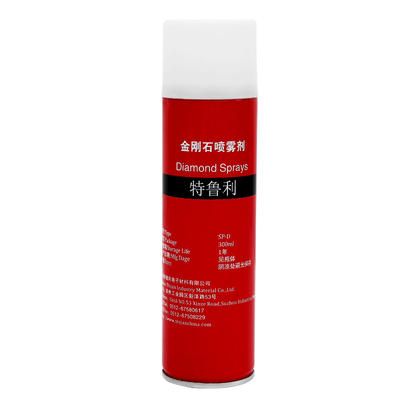
.jpg?imageView2/2/w/400/format/jpg/q/75 "MD-WT Monocrystalline Diamond Suspension")
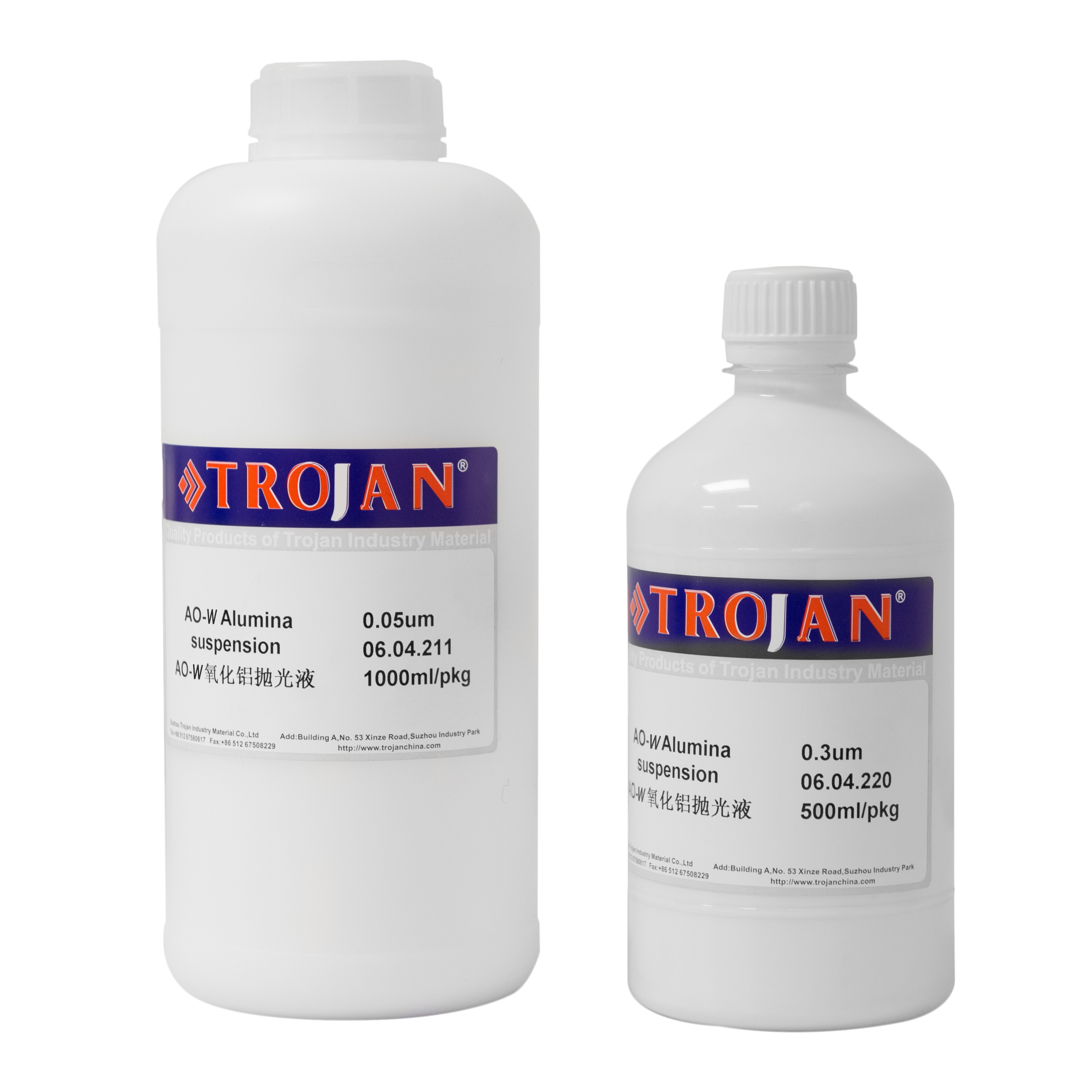
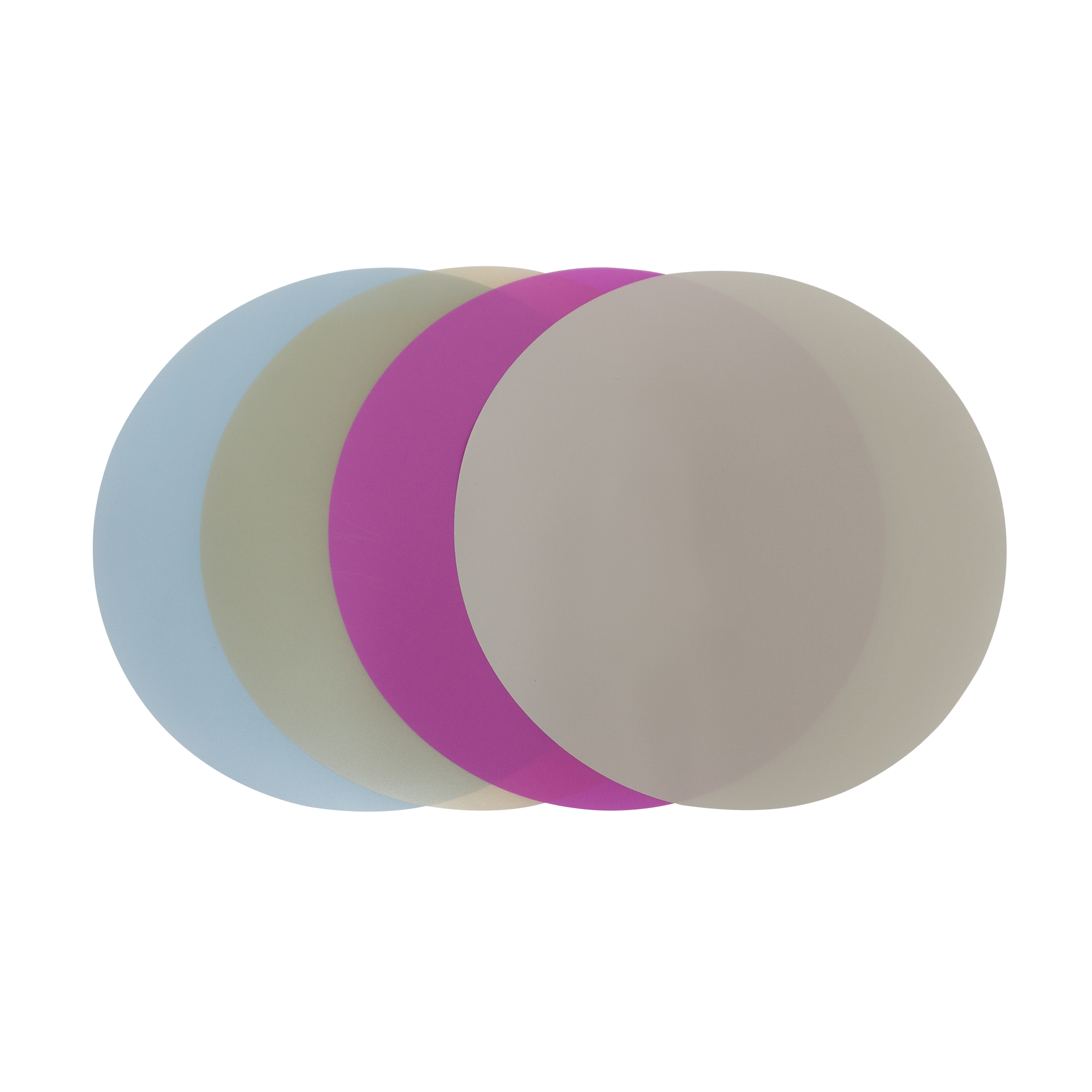

Based in China, TROJAN pays attention to the international market, and has sold metallographic equipment to more than 50 countries, such as Europe, America, Japan and South Korea, Southeast Asia countries and regions


