Industry knowledge
What is the importance of metallographic grinding and polishing machines in materials science research?
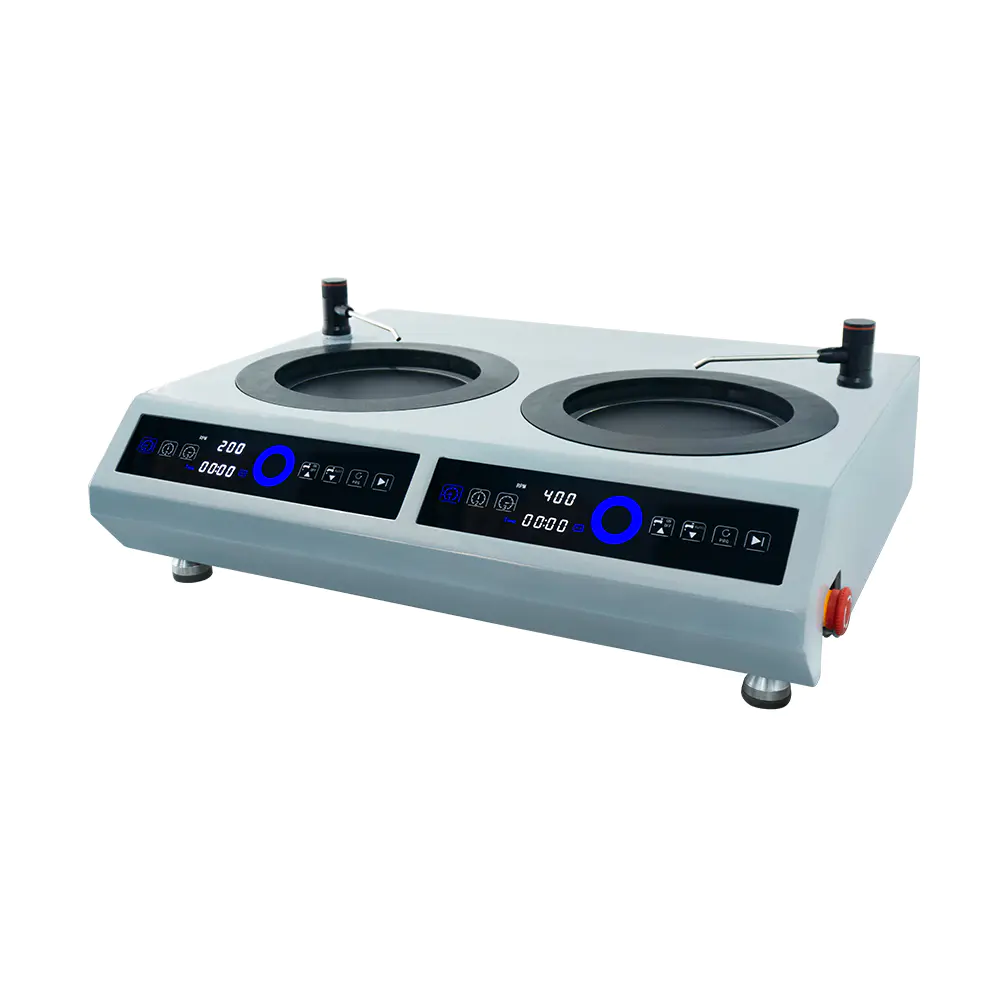
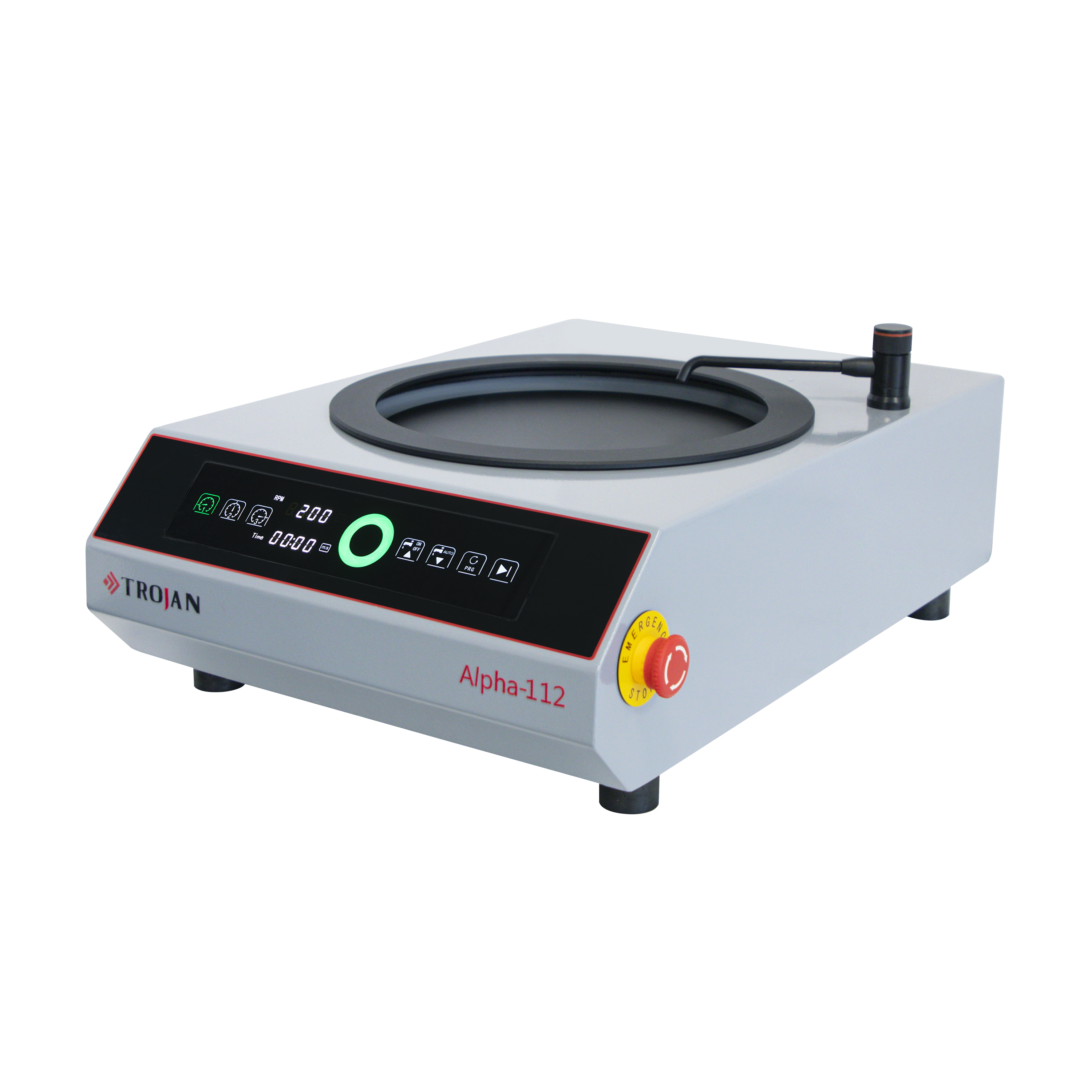
Metallographic grinding and polishing machines are of utmost importance in materials science research. These machines play a crucial role in preparing metallographic samples for analysis. By removing surface layers and achieving a smooth and polished surface, these machines allow for accurate microstructural examination and characterization of metals and alloys.
The importance of these machines lies in their ability to provide precise and reproducible results. The quality of sample preparation greatly impacts the accuracy of subsequent examinations, such as microscopy and spectroscopy. Metallographic grinding and polishing machines ensure that samples are prepared uniformly, free from artifacts, and with minimal deformation or damage.
Additionally, these machines enable the study of various material properties, such as grain size, phases, inclusions, and defects. They aid in understanding the microstructural evolution and overall performance of materials, which has significant implications in fields like metallurgy, materials engineering, manufacturing, and failure analysis.
In summary, metallographic grinding and polishing machines are essential tools in materials science research as they enable the precise and controlled preparation of samples, leading to reliable and meaningful microstructural analysis.
How do metallographic grinding and polishing machines contribute to the quality and precision of metallographic sample preparation?
Metallographic grinding and polishing machines are essential tools in the field of materials science and engineering. They are specifically designed to prepare metallographic samples for analysis, allowing researchers to examine the microstructure and properties of materials. These machines play a crucial role in achieving high-quality, precise, and accurate results in metallographic sample preparation.
One of the primary ways in which metallographic grinding and polishing machines contribute to the quality of sample preparation is through the controlled removal of material. These machines are equipped with abrasive wheels or discs, which can be adjusted to remove a precise amount of material from the sample surface. The removal of material is done in a controlled manner, ensuring that the material is removed uniformly and evenly across the entire sample. This is crucial for obtaining flat, even surfaces that are free from any irregularities or artifacts. The presence of such irregularities can adversely affect the accuracy and reliability of subsequent microstructural analysis.
In addition to controlled material removal, metallographic grinding and polishing machines also facilitate the achievement of a smooth and polished surface. After initial grinding to remove the bulk material, fine grinding and polishing steps are carried out to refine the surface finish. These machines are equipped with progressively finer grits of abrasive materials to achieve a smooth and mirror-like surface. The polishing step further enhances the surface finish and prepares the sample for examination under a microscope. A smooth and polished surface not only improves the visual appearance but also allows for clear and unobstructed observation of the microstructure. This is crucial for accurately identifying various microstructural features such as grain boundaries, phases, inclusions, or any defects.
Moreover, metallographic grinding and polishing machines enhance the precision in sample preparation by providing repeatability and consistency. These machines offer precise control over the parameters such as applied pressure, rotation speed, and abrasive selection. The ability to control these variables ensures that each sample is prepared under the same conditions, resulting in consistent and reproducible results. This is particularly important when performing comparative studies or evaluating the effects of different processing conditions on the microstructure.
Furthermore, metallographic grinding and polishing machines enable significant time and effort savings. Manual grinding and polishing can be time-consuming, tedious, and highly operator-dependent. In contrast, these machines provide automated or semi-automated processes, which significantly reduce the time and effort required for sample preparation. Many machines are equipped with programmable settings, allowing for the automation of grinding and polishing cycles. This not only saves time but also eliminates the risk of operator-induced errors, ensuring consistent and reliable results. Additionally, the use of these machines minimizes operator fatigue and improves overall productivity in the laboratory.
Lastly, metallographic grinding and polishing machines also offer versatility in sample preparation. They are not limited to metals but can be used for a wide range of materials, including ceramics, composites, polymers, and even biological specimens. These machines can handle a variety of sample shapes and sizes, allowing for customization and flexibility in sample preparation. This versatility is particularly useful in materials science research, where different types of materials are routinely analyzed.
 英语
英语 西班牙语
西班牙语 德语
德语