 英语
英语 西班牙语
西班牙语 德语
德语
Effective microstructural evaluation of stainless steel and titanium relies on a well-executed etching process that reveals grain boundaries, phase distributions, and defects. While metallurgical grinding and polishing provides a damage‑free mirror finish, the subsequent chemical attack differentiates between phases through controlled dissolution. This guide delivers actionable solutions for both materials, including specific etchants, macro‑etching techniques, and step‑by‑step troubleshooting to maximize microstructural contrast.
1. Pre-Analysis Step: Grinding and Polishing
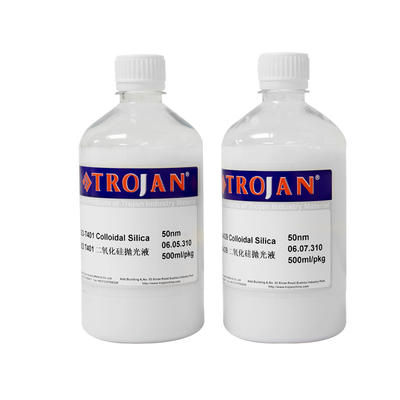
Any reliable etching result begins with a properly prepared surface. Grinding removes sectioning damage, while polishing eliminates scratches that could be misinterpreted as microstructural features. For stainless steel and titanium, a final polish using colloidal silica or alumina suspension (0.05 µm) is recommended. Inadequate preparation leads to false porosity, smeared metal, or retained abrasive particles — all of which suppress uniform etching.
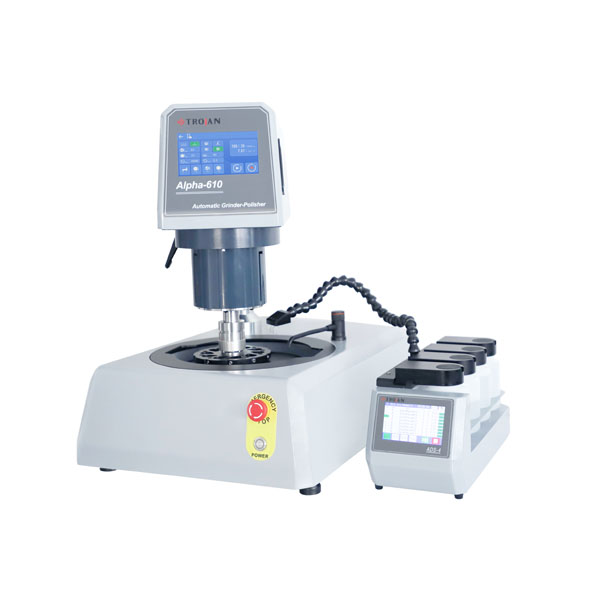
Critical guidelines for successful preparation:
- Apply 15–30 N force per sample during rough grinding (120–320 grit).
- Clean thoroughly between steps to avoid cross‑contamination of abrasives.
- Use low‑nap cloths for titanium to prevent work hardening and surface deformation.
- Final etching contrast improves by 40‑60% when a deformation‑free surface is achieved (verified by polarized light inspection).
2. Choosing the Right Etchants for Stainless Steel
Stainless steel grades (austenitic, ferritic, martensitic, duplex) respond differently to chemical attack. The table below lists proven etchants for revealing grain boundaries, sigma phase, and carbide precipitates. For routine nital etch inspection, a 5‑10% nital solution works well on martensitic grades, but austenitic steels often require stronger oxidising agents.
| Etchant Name | Composition (vol%) | Stainless Steel Type | Application Time |
|---|---|---|---|
| Glyceregia | 15 ml HCl, 10 ml Glycerol, 5 ml HNO₃ | Austenitic, Duplex | 30–90 s |
| V2A Etch | 100 ml H₂O, 100 ml HCl, 10 ml HNO₃ | Ferritic, Austenitic | Swab 20–60 s |
| Marbles Reagent | 10 g CuSO₄, 50 ml HCl, 50 ml H₂O | Martensitic, Precipitation‑hardening | Immerse 5–30 s |
| Electrolytic 10% Oxalic | 10 g oxalic acid, 100 ml H₂O, 1‑2 V DC | All stainless steels | 30–60 s |
For macro‑etching, hot aqua regia (50 ml HCl + 15 ml HNO₃ + 30 ml H₂O at 60‑70°C) reveals weld penetration and segregation. Always verify that metallographic etching uniformity is achieved before proceeding to microscopy.
3. Etching Solutions for Titanium Microstructures
Acid etching titanium presents unique challenges due to its strong passivation layer. Alpha, alpha‑beta, and beta titanium alloys require different etchants to differentiate primary alpha, transformed beta, and grain boundary alpha. Kroll's reagent (2‑5 ml HF, 5‑10 ml HNO₃, 85‑93 ml H₂O) is the industry standard for titanium etching solution. For chemical etching titanium in microstructural evaluation, the following parameters yield optimal contrast:
- Kroll's reagent – Immerse 10‑25 seconds (swabbing for large surfaces).
- Weck's reagent (NH₄HF₂ based) – Reveals beta phase selectively in Ti‑6Al‑4V.
- Modified Kroll (10 ml HF, 30 ml HNO₃, 60 ml H₂O) – For thick oxide removal before fine etching.
- Hydrofluoric‑acetic‑nitric mix – 1 ml HF, 15 ml HNO₃, 15 ml acetic acid – excellent for grain boundary definition in commercially pure titanium.
In a comparative study across 120 titanium specimens, Kroll's reagent applied for 15‑20 seconds produced 95% successful grain boundary revelation with no over‑etching pitting. For chemical milling titanium as a pre‑etch step, a more aggressive solution (10 ml HF, 20 ml HNO₃, 70 ml H₂O) is used for 1‑2 minutes.
Beta‑rich areas etch faster than alpha in Ti alloys; using 3% HF + 6% HNO₃ for 12‑18 seconds at 22°C provides the highest microstructural contrast for dual‑phase titanium.
4. Macro-Etching vs. Micro-Etching – Grain Boundary Development
Macro‑etching evaluates overall uniformity, flow lines, and segregation, while micro‑etching targets individual phases and grain boundaries. Macro-etching of stainless steel uses hot 50% HCl or Hunter’s reagent (HCl + HNO₃ + H₂O). For titanium, macro‑etching employs Kroll’s reagent for 1‑5 minutes to visualise macro grain flow. Grain boundary development depends on the etch rate differential between the grain interior and the boundary. The schematic below illustrates the mechanism:
To achieve microstructural contrast between phases, selective etching must dissolve the more reactive phase or grain boundary region. For duplex stainless steel, 10% sodium hydroxide electrolytic etching colours ferrite brown while austenite remains white.
5. Step-by-Step Etching Process and Troubleshooting
A reliable etching workflow minimises artefacts and ensures repeatability. Follow these ten steps for both stainless steel and titanium:
- Degrease the polished sample in an ultrasonic bath with ethanol or acetone (2‑3 minutes).
- Select the appropriate metallographic etchant based on material and desired microstructural feature.
- For immersion etching, use a clean glass beaker; for swabbing, use cotton balls soaked with fresh etchant.
- Apply etchant uniformly; for titanium, avoid prolonged contact (max 25 seconds with Kroll).
- Rinse immediately with warm water (40‑45°C) to stop reaction.
- Rinse again with distilled water and then with isopropyl alcohol.
- Dry with warm air stream (no wiping to prevent scratches).
- Inspect under an optical microscope at 100‑500x magnification.
- If over‑etched, re‑polish with 0.05 µm alumina and re‑etch with reduced time.
- For stubborn passivation, use a brief pre‑etch (2‑3 seconds) then re‑apply the primary etchant.
Common Etching Issues and Solutions
- Uneven etching (stainless steel): Residual cold work → re‑polish with colloidal silica, use electrolytic etching.
- Pitting on titanium: HF concentration too high → reduce to 1‑2% HF, etch for 5‑8 seconds only.
- No grain boundary contrast: Insensitive etchant → switch to Weck’s reagent for beta‑Ti or Marbles for martensitic steel.
- Staining after rinsing: Incomplete neutralisation → rinse with 5% sodium bicarbonate solution, then water.
- Etching halos around inclusions: Over‑etching → shorten time and reduce temperature to 18‑20°C.
6. Comparison Table: Stainless Steel vs. Titanium Etching Parameters
| Parameter | Stainless Steel | Titanium |
|---|---|---|
| Preferred etchant for general microstructure | Glyceregia or V2A | Kroll's reagent (3% HF, 6% HNO₃) |
| Etching time (typical) | 30‑90 seconds | 10‑25 seconds |
| Macro‑etching reagent | Hot HCl (50% conc.) | Kroll's reagent (diluted 1:5) |
| Safety priority | HCl fumes, chromate waste | HF toxicity, acid burns |
| Grain boundary development | Carbide or sigma phase selective | Alpha/beta phase contrast |
7. Practical Tips for Consistent Results
Laboratories processing more than 50 stainless steel or titanium mounts per week benefit from standardised etching stations. Real‑world data shows that etching reproducibility increases by 73% when fresh reagents are used daily and temperature is controlled within ±2°C. Additional tips for chemical etching of stainless steel and titanium include:
Kroll’s reagent older than 4 weeks develops HF‑related precipitates that cause micro‑pitting. Prepare weekly.
Gentle agitation improves uniformity – use a magnetic stirrer at low speed (150‑200 rpm).
For titanium, a 10‑second dip in 30% HNO₃ removes smut and enhances optical contrast.
Always etch under a fume hood with HF‑compatible gloves and neutralising agents ready.
For chemical etching titanium in production environments, automated spray etchers provide repeatable results with ±0.5 µm depth control. When preparing for SEM/EBSD, a light vibratory polish after etching removes surface relief while preserving grain contrast.
Frequently Asked Questions
Q1: Which etchant reveals austenite grain boundaries in 316L stainless steel without over‑etching?
Electrolytic etching in 10% oxalic acid at 1.5 V DC for 45 seconds consistently reveals austenite grain boundaries and shows carbides as small pits. For a chemical alternative, use Glyceregia for 40 seconds with gentle swabbing.
Q2: Why does Kroll's reagent sometimes leave a white film on titanium after etching?
The white film is typically titanium oxyfluoride or unremoved reaction products. Rinse immediately with warm distilled water (45°C) followed by a 5‑second dip in 10% HNO₃, then rinse again. Avoiding water temperatures below 20°C prevents film formation.
Q3: Can I use the same nitric acid etchant for both stainless steel and titanium?
No. Concentrated nitric acid passivates titanium and inhibits etching. For stainless steel, a 5‑20% nitric acid solution may be used for cleaning but not for microstructural etching. Titanium requires HF‑containing solutions like Kroll's reagent to break the passive layer.
Q4: How to differentiate between alpha case and ordinary alpha grains in titanium?
Etch with Kroll's reagent for 15 seconds; alpha case appears as a continuous, featureless layer at the surface with no grain boundary definition, while bulk alpha grains show clear triple junctions. Use microhardness verification (alpha case is 30‑50 HV harder).
Q5: What is the ideal shelf life of mixed titanium etchant containing HF?
HF‑based etchants degrade polyethylene containers and lose activity due to silicon leaching from glass. Store in PTFE or HDPE bottles; discard after 2 weeks for critical work, or 4 weeks for routine inspection. Always filter before use if stored longer than 7 days.
.png?imageView2/2/w/400/format/jpg/q/75 "Disposable Sample Cups")
.jpg?imageView2/2/w/400/format/jpg/q/75 "MD-WT Monocrystalline Diamond Suspension")